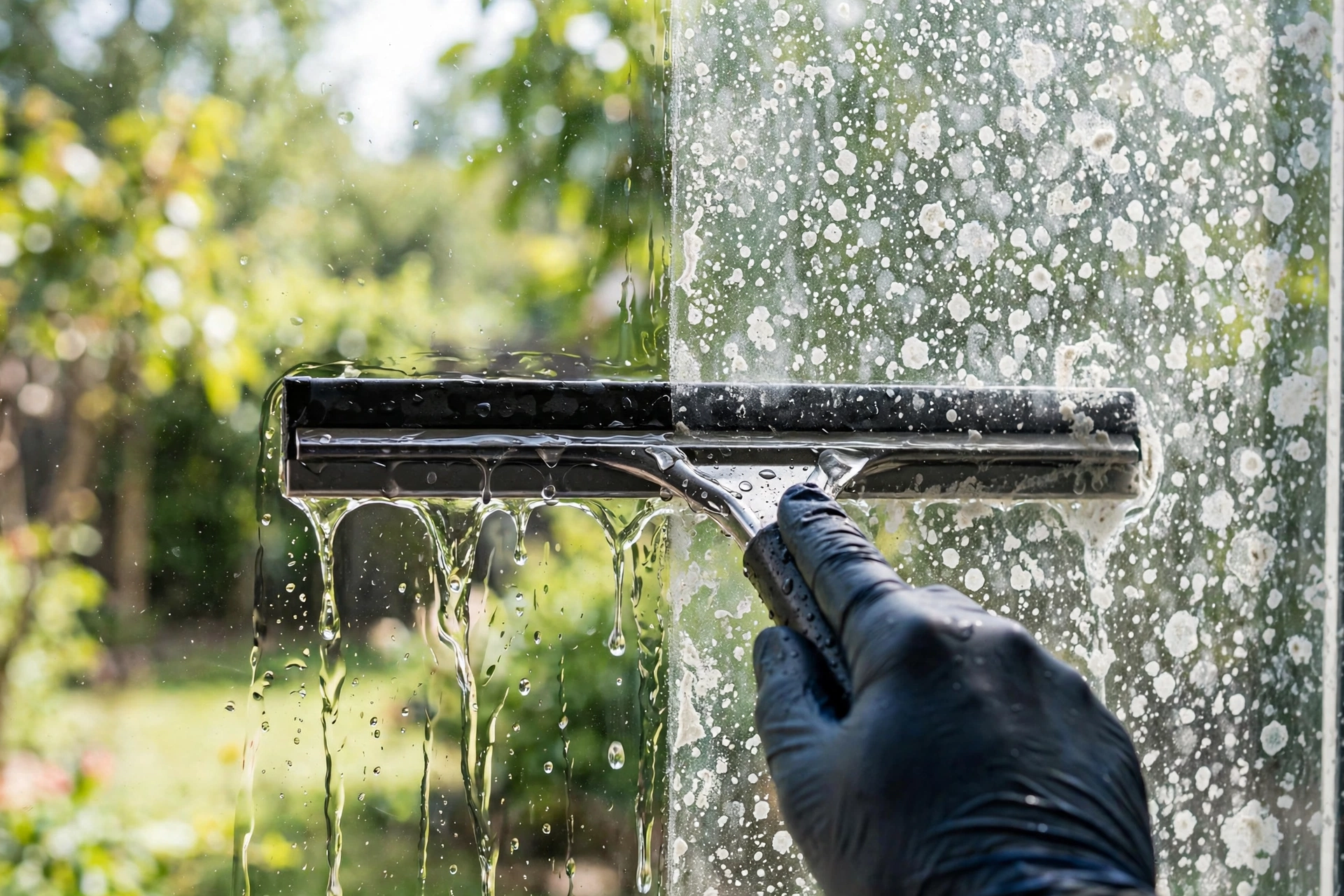
Clean, clear windows make a noticeable difference in the appearance of any home or commercial property. They allow natural light to enter, improve visibility, and create a polished look for both interior and exterior spaces. However, hard water stains can gradually affect window clarity, leaving behind white spots, cloudy patches, and stubborn mineral deposits that ordinary glass cleaners cannot remove.
tain removal on windows requires identifying the type of staining, selecting suitable cleaning products, and using restoration techniques that preserve the glass. When mineral deposits have caused surface etching, more advanced treatment may be necessary.
This guide explains what causes hard water stains, how to remove calcium spots on window glass, which professional restoration techniques may help, and how to prevent future mineral buildup.
What Causes Hard Water Stains on Windows?
Hard water contains dissolved minerals, particularly calcium and magnesium. When water droplets land on a window and evaporate, these minerals remain on the glass. Repeated exposure creates visible spots, rings, and cloudy patches that can become increasingly difficult to remove.
Common causes include sprinkler systems spraying exterior windows, mineral-rich tap water, rainwater runoff, and water used during construction or routine property maintenance. Windows near gardens, swimming pools, and landscaped areas are particularly vulnerable to recurring mineral deposits.
How Mineral Deposits Build Up
Fresh water spots may initially appear as small white marks. If they are not removed, additional mineral layers can accumulate and create a rough, cloudy appearance.
Over time, these deposits may become more difficult to dissolve with standard cleaning solutions. In some cases, prolonged exposure to minerals and other contaminants can contribute to changes in the glass surface itself.
Why Regular Glass Cleaner Is Not Always Enough
Standard glass cleaners are designed to remove fingerprints, dust, grease, and everyday dirt. They may not effectively dissolve hardened calcium deposits.
When ordinary cleaning no longer works, a specialized mineral deposit window cleaner or a professional restoration treatment may be needed. Before choosing a stronger product, however, it is important to determine whether the marks are removable deposits or actual glass damage.
Hard Water Stains vs. Etched Glass
Understanding the difference between mineral buildup and etched glass helps property owners choose the correct treatment and avoid unnecessary repairs.
Identifying Removable Mineral Stains
Hard water stains typically appear as white spots, chalky streaks, circular marks, or cloudy patches. They often follow the pattern of sprinkler spray or water runoff.
If the marks improve after an appropriate mineral-removal treatment, the problem was likely caused primarily by deposits sitting on the glass surface.
Recognizing Glass Etching
Etching occurs when the glass surface itself becomes microscopically altered or damaged. This can happen after prolonged exposure to certain contaminants or aggressive chemicals.
Unlike removable deposits, etched areas may remain cloudy even after thorough cleaning. Specialized polishing may improve some superficial imperfections, but deeper damage may require glass replacement.
When Professional Assessment Is Necessary
If stains persist despite suitable cleaning, avoid repeatedly applying stronger chemicals or abrasive tools. These attempts can damage coatings, scratch glass, or worsen the appearance of the affected area.
Sparkle Windows LLC recommends evaluating the glass condition before proceeding with aggressive restoration methods, particularly for large windows, coated architectural glass, and expensive glazing systems.
Effective Methods for Hard Water Stain Removal on Windows
The right approach depends on the severity of the staining, the type of glass, and whether the surface has already been damaged. Restoration should begin with the least aggressive suitable method.
1. Start With Gentle Cleaning
Rinse the glass with clean water to remove loose dust and grit. Apply a glass-safe cleaning solution and wipe the surface using a soft microfiber cloth.
This initial cleaning helps prevent dirt particles from scratching the glass during further treatment.
If mineral deposits remain, test a suitable hard-water stain remover on a small, inconspicuous area before treating the entire window.
2. Use Acid-Based Pre-Treatments Carefully
Certain mineral deposits respond to mildly acidic products formulated for glass. These treatments can help dissolve calcium-based buildup and loosen stubborn water spots.
However, not every acidic cleaner is safe for every window. Strong acids may damage metal frames, stone surfaces, sealants, and specialized glass coatings.
Important Chemical Safety Precautions
Always follow the manufacturer’s instructions for application, contact time, rinsing, and protective equipment. Never mix cleaning products, especially acids with bleach or incompatible chemicals.
Acid-based treatments should not be selected solely because the stains appear severe. For coated glass or extensive mineral buildup, a qualified professional can help determine whether chemical treatment is appropriate.
3. Apply Mechanical Buffing Compounds When Suitable
Mechanical buffing may help remove stubborn residue or selected superficial imperfections that remain after chemical cleaning.
Professional glass polishing compounds are used with compatible equipment to work on specific surface conditions. The process requires controlled pressure, suitable materials, and careful monitoring.
Excessive abrasion can scratch glass, create uneven reflections, or cause visible optical distortion. For this reason, unapproved abrasive pads and household scouring products should be avoided.
4. Consider Cerium Oxide Polishing
Cerium oxide is a specialized polishing compound used in certain glass restoration applications. When the glass condition and damage type are suitable, it may help improve fine surface imperfections.
However, cerium oxide polishing is not a universal solution for hard water stains. It may not correct deep etching, severe scratches, damaged coatings, or extensive glass deterioration.
Why Professional Polishing Matters
Polishing removes or modifies a small amount of the glass surface under controlled conditions. Improper application can produce distortion, unevenness, or additional damage.
Before polishing, the glass type, coating, depth of damage, and expected results should be evaluated. In some cases, replacing the affected glass is the more practical option.
Choosing the Right Mineral Deposit Window Cleaner
Selecting a suitable mineral deposit window cleaner is essential for removing stains without harming the glass or nearby materials.
Factors to Consider Before Cleaning
When choosing a product, consider:
Glass compatibility: Verify that the cleaner is suitable for the specific glazing and any protective coatings.
Deposit severity: Light water spots may respond to gentle treatment, while hardened deposits may require specialized products.
Surface condition: Existing scratches or etching may require professional assessment.
Surrounding materials: Protect window frames, painted finishes, sealants, stonework, and landscaping.
Product instructions: Follow the recommended application, rinsing, and safety procedures.
Why Spot Testing Is Important
A product that works well on one type of glass may be unsuitable for another. Testing a small area can help identify unwanted reactions before the treatment is applied across the entire window.
Sparkle Windows LLC encourages careful product selection and appropriate cleaning methods to help preserve glass clarity and avoid preventable damage.
How to Restore Cloudy Windows
When homeowners want to restore cloudy windows, the first step is identifying what causes the haze. Mineral deposits, etched glass, and failed insulated glass seals can all create a cloudy appearance, but each requires a different solution.
Follow a Systematic Restoration Process
A careful restoration process generally involves the following steps:
Inspect the glass: Examine the location, pattern, and severity of the cloudiness.
Remove loose debris: Clean away dust, dirt, and grit.
Test a compatible treatment: Apply a suitable product to a small area.
Remove surface deposits: Follow the manufacturer’s directions and rinse thoroughly.
Reassess the glass: Check whether cloudiness remains after mineral removal.
Determine the next step: Consider professional polishing or glass replacement if damage persists.
What About Cloudiness Between Double-Glazed Panes?
If fogging or moisture appears between the panes of an insulated glass unit, the window seal may have failed. Cleaning the exterior surface will not resolve moisture or deposits trapped inside the unit.
A glazing professional can inspect the window and determine whether repair or replacement is appropriate.
Applying Hydrophobic Protective Coatings After Restoration
After removing mineral deposits, a compatible hydrophobic protective coating may help make future window maintenance easier.
These coatings encourage water to bead and move off the glass surface. Depending on the product and environmental conditions, this can reduce the persistence of water spotting and help keep windows looking cleaner between maintenance visits.
Benefits of Hydrophobic Glass Coatings
Suitable protective coatings may:
Encourage water runoff from treated surfaces.
Make routine cleaning easier.
Reduce the accumulation of certain water-related contaminants.
Help maintain the appearance of properly restored glass.
Proper Application and Ongoing Maintenance
Before applying a coating, the glass should be thoroughly cleaned and free of mineral residue, grease, and cleaning chemicals.
Always verify compatibility with the window’s glass type and factory-applied coatings. Protective treatments may need periodic inspection or reapplication according to the manufacturer’s guidance.
Hydrophobic coatings cannot reverse existing etching, repair scratches, or eliminate the need for regular window cleaning.
Preventing Future Hard Water Stains
Prevention is often easier and less expensive than restoring heavily stained glass. A few simple maintenance practices can reduce repeated mineral exposure.
Adjust Sprinklers and Irrigation Systems
Position sprinkler heads away from windows, sliding glass doors, and exterior glazing. Check their direction regularly, particularly after landscaping changes or irrigation repairs.
Clean Windows Before Deposits Harden
Remove water spots before repeated exposure creates thick mineral layers. Windows near sprinklers or areas with mineral-rich water may need more frequent inspection.
Use Suitable Water and Cleaning Tools
Where practical, use low-mineral or purified water for the final rinse. A clean squeegee and soft microfiber cloth can help remove water before it evaporates and leaves visible deposits.
Schedule Regular Window Maintenance
Routine cleaning helps preserve the appearance of windows and makes it easier to identify developing stains. Properties with extensive glazing or difficult exterior access may benefit from professional window cleaning services.
Why Choose Sparkle Windows LLC?
Maintaining clear windows requires more than removing visible dirt. Effective care involves understanding the causes of staining, selecting compatible products, and recognizing when glass needs specialized restoration.
Sparkle Windows LLC understands the value of clean, attractive glass and careful window maintenance. Whether you are dealing with stubborn water spots or trying to prevent mineral buildup, choosing an appropriate cleaning approach can help preserve window clarity and protect your investment.
For persistent hard water stains, extensive cloudiness, or suspected etching, professional evaluation can help determine whether cleaning, polishing, or replacement offers the best result. Our focus is on encouraging responsible maintenance practices that support attractive windows and long-term property care.
Frequently Asked Questions
What is the best way to remove calcium spots on window glass?
Start with a gentle cleaning solution and a soft microfiber cloth. If deposits remain, use a compatible mineral remover according to its instructions. Persistent stains may require professional restoration.
Can hard water stains permanently damage windows?
Yes. Mineral deposits are often removable, but prolonged exposure may contribute to etching or other surface changes. Permanent damage may require polishing or replacement.
Does cerium oxide remove hard water stains?
Cerium oxide is primarily used for glass polishing and certain superficial imperfections. It may help with selected restoration problems but is not suitable for every type of stain or damage.
How can I restore cloudy windows?
Determine whether the cloudiness comes from surface deposits, etched glass, or moisture trapped between double-glazed panes. Each condition requires a different treatment.
Do hydrophobic coatings prevent hard water stains?
Hydrophobic coatings can help water run off glass and may make cleaning easier. They do not guarantee stain prevention or repair existing surface damage.
How often should windows be cleaned to prevent mineral buildup?
Cleaning frequency depends on sprinkler exposure, local water quality, weather, and environmental conditions. Windows exposed to frequent water spray may require more frequent maintenance.
Final Thoughts
Hard water stains can reduce window clarity and make a well-maintained property appear neglected. Understanding the difference between removable mineral deposits and etched glass is the first step toward choosing an effective solution.
From selecting a suitable mineral deposit window cleaner to evaluating acid-based pre-treatments, mechanical buffing, cerium oxide polishing, and hydrophobic protective coatings, each method must be appropriate for the glass and its condition.
With careful maintenance, suitable restoration techniques, and preventive measures, property owners can protect their windows and maintain a clear, attractive appearance. Sparkle Windows LLC encourages homeowners and property managers to prioritize safe cleaning practices and informed restoration decisions for lasting results.
______________________________________________________________________