Clean storefront windows help businesses create a welcoming first impression before customers even walk through the door. Dust, fingerprints, water spots, traffic residue, and smudges can quickly make retail windows look neglected, particularly in busy shopping areas. For businesses that rely on walk-in traffic, maintaining clear glass is an important part of presenting a professional image.
Storefront window cleaning maintenance provides a practical way to keep retail glass clean throughout the year. Rather than waiting until windows become visibly dirty, businesses can arrange recurring cleaning based on their location, customer traffic, and operating hours. A consistent schedule also helps reduce the buildup of stubborn residue that may require additional effort to remove.
Sparkle Windows understands the importance of presenting clean, inviting glass. In this guide, we explore storefront cleaning frequency, fingerprint removal, sticker adhesive, curb appeal, and the benefits of establishing a commercial window cleaning schedule.
Why Storefront Window Cleaning Matters for Retail Businesses
Storefront windows are among the first features customers notice when approaching a shop, restaurant, showroom, or other commercial property. Clean glass allows people to see displays clearly and makes the entrance appear better maintained.
Create a Positive First Impression
Customers often form an impression of a business based on its exterior. Streaked windows, visible fingerprints, and accumulated dirt can make an otherwise attractive storefront appear neglected.
Regular cleaning helps maintain a polished appearance and supports a consistent presentation across the business’s exterior.
Keep Product Displays Visible
Retailers use window displays to showcase products, promotions, seasonal collections, and new arrivals. Dirty glass can reduce visibility and distract customers from the items being displayed.
Clean windows help promotional materials and merchandise remain visible from the sidewalk or parking area. This is especially useful for clothing boutiques, electronics stores, furniture showrooms, and specialty retailers.
Support a Cleaner Customer Environment
Restaurants, cafés, bakeries, and other food businesses often have windows that customers can see from both inside and outside. Fingerprints, food splashes, and hand marks can accumulate quickly near entrances and seating areas.
A regular cleaning routine helps maintain a tidy appearance while complementing the business’s broader cleaning and hygiene practices.
How Often Should Storefront Windows Be Cleaned?
The ideal commercial glass cleaning schedule depends on the type of business, the surrounding environment, and how quickly the windows become dirty. A store on a busy pedestrian street may need more frequent attention than a business in a quieter commercial area.
Two common options are weekly and bi-weekly cleaning.
Weekly Storefront Window Washing
A weekly storefront window wash can be suitable for businesses with heavy foot traffic, prominent display windows, or frequent customer contact.
Weekly service may benefit:
Retail shops located on busy shopping streets.
Restaurants and cafés with street-facing windows.
Stores near roads with significant vehicle traffic.
Businesses with large promotional displays.
Entrances where customers frequently touch the glass.
Regular visits help remove fresh fingerprints, dust, and everyday smudges before they become more noticeable. Weekly cleaning can also help businesses maintain a consistent appearance during busy sales periods or seasonal promotions.
However, weekly service is not necessary for every storefront. The right frequency should reflect actual cleaning needs rather than follow a fixed rule.
Bi-Weekly Storefront Window Cleaning
Bi-weekly service, meaning once every two weeks, may be appropriate for businesses in less exposed locations or those whose windows remain reasonably clean between visits.
This option can work well for smaller shops, low-traffic commercial properties, and businesses with limited street-facing glass.
A bi-weekly schedule provides recurring maintenance while reducing the number of service visits compared with weekly cleaning. Business owners should still monitor the windows between visits, especially after storms, nearby construction, or unusually busy trading periods.
Choosing the Right Frequency
The best schedule balances appearance, customer expectations, environmental conditions, and budget.
Consider the following factors:
Foot traffic: More people passing the entrance can mean more fingerprints and contact marks.
Road proximity: Traffic can deposit dust and grime on exterior glass.
Weather: Rain, wind, and airborne debris may leave spots or residue.
Business type: Restaurants and high-end retail stores may prioritize spotless glass.
Window exposure: Large windows facing direct sunlight may make streaks and smudges more noticeable.
Promotional activity: Product launches and seasonal displays may require additional cleaning.
Many businesses start with a weekly or bi-weekly schedule and adjust it after observing how quickly their windows become dirty.
Removing Fingerprints, Smudges, and Everyday Marks
Fingerprints are a frequent problem for retail storefronts, particularly around entrances, door handles, display windows, and areas where customers examine products through the glass.
Oils from skin can leave visible marks that ordinary dust removal will not eliminate. When sunlight hits the glass at an angle, even small smudges can become highly noticeable.
Focus on High-Contact Areas
Entrance doors and nearby glass panels often require attention more frequently than upper or less accessible sections. Door handles, push plates, and display areas should be inspected for fingerprints during routine cleaning.
Businesses can help maintain these areas by incorporating quick spot checks into their daily opening or closing procedures.
Use Appropriate Cleaning Methods
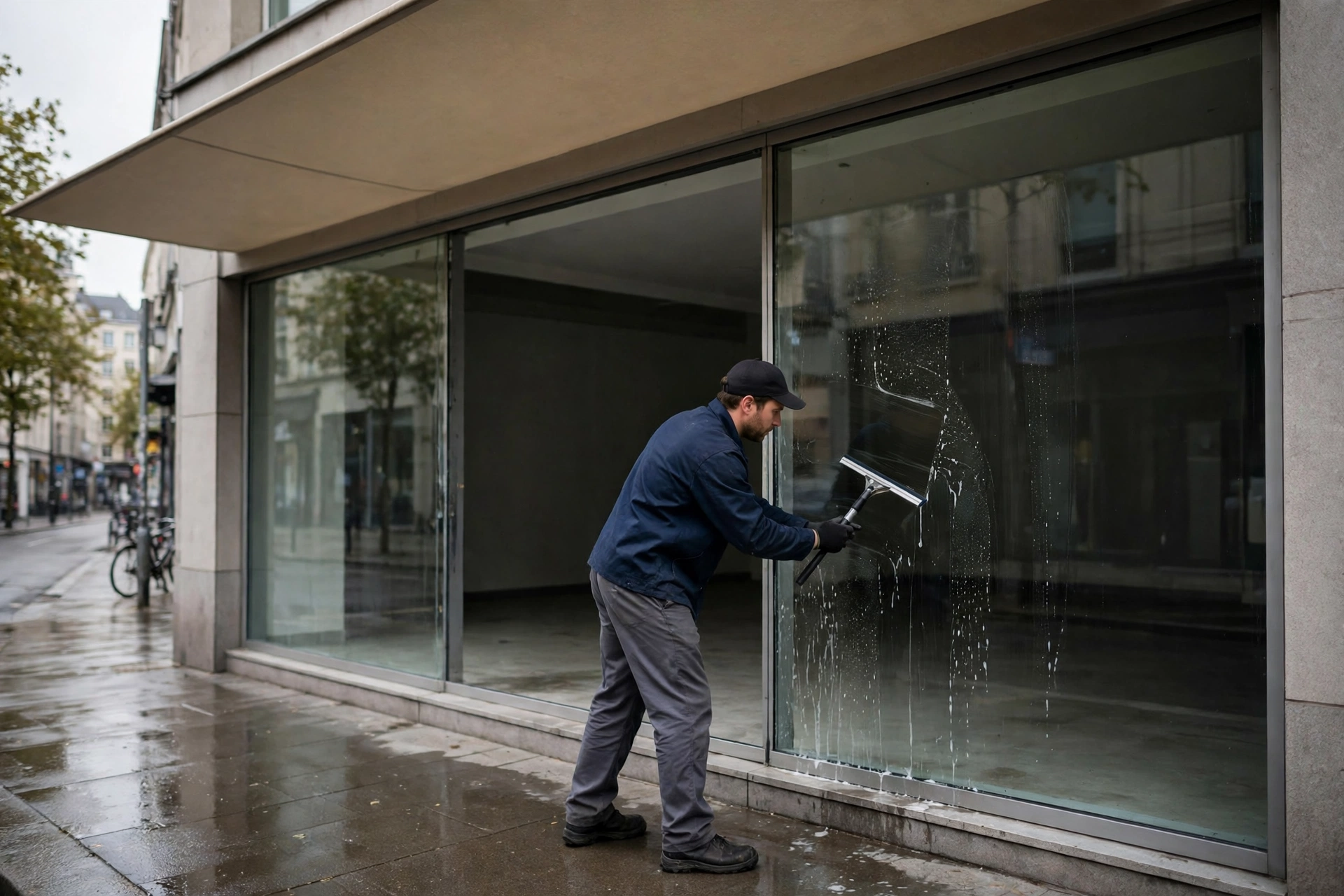
Professional glass cleaning generally involves suitable glass-cleaning solutions, clean applicators, and squeegees used with controlled technique. The correct method helps remove oils and dirt without leaving streaks or lint.
Using dirty cloths or contaminated cleaning tools can spread residue rather than remove it. Excessive detergent can also leave a film that affects the finished appearance.
For a consistently clean result, cleaning tools should be maintained properly and replaced or washed when necessary.
Keep Interior and Exterior Glass in Mind
A storefront may look dirty even after the exterior has been cleaned if fingerprints and smudges remain on the inside. Interior glass can collect marks from customers, staff, displays, and nearby seating.
A maintenance plan should specify whether each visit includes exterior glass only or both interior and exterior surfaces.
Removing Tape, Stickers, and Adhesive Residue
Retail businesses regularly use promotional stickers, opening-hour decals, price labels, seasonal graphics, and temporary signs. When these materials are removed, adhesive residue can remain on the glass.
If left untreated, the residue may collect dust and become increasingly difficult to remove.
Identify the Type of Residue
Not all adhesive marks respond to the same cleaning method. Fresh sticker residue may be easier to remove than old, hardened adhesive that has been exposed to sunlight.
Before treatment, identify the affected surface and determine whether it has a protective coating, applied film, printed graphic, or other material that could be damaged by scraping or solvents.
Use Care When Removing Stickers
Glass-safe adhesive removers and suitable tools may help loosen residue. However, scraping requires particular care.
A razor scraper can damage some glass surfaces, especially when used on unsuitable glass, coated surfaces, films, or glass containing certain defects. Tempered glass can also be vulnerable to scratching from contamination or improper scraping techniques.
Before using a blade, confirm that the glass type and condition are suitable for the method. Use the manufacturer’s recommended procedure and avoid scraping coated or filmed surfaces unless the product instructions specifically permit it.
For stubborn adhesive, a trained cleaner can assess the material and choose an appropriate removal method.
Prevent Residue From Affecting the Display
After removing adhesive, clean the surrounding glass to eliminate remaining cleaning solution and loosened debris. Check the area under different lighting conditions to make sure the finished surface looks even.
When stores regularly change promotional decals, scheduling adhesive removal as part of planned maintenance can prevent the work from accumulating into a larger task.
How Clean Storefront Windows Improve Curb Appeal
Curb appeal is not limited to homes. For retail businesses, the appearance of the exterior can influence whether a property looks inviting, professional, and ready to welcome customers.
Make the Business Look Well Maintained
Clear windows complement clean entrances, tidy sidewalks, attractive signage, and organized displays. When these elements work together, the storefront can create a stronger overall impression.
Although clean glass cannot guarantee more sales, it can help remove a visual distraction that might otherwise make a business look neglected.
Improve Promotional Visibility
Retail displays are designed to attract attention. Dusty glass, streaks, and fingerprints can interfere with the visibility of signs and merchandise.
Regular cleaning helps customers see new products, seasonal decorations, and special offers more clearly from outside.
Maintain a Consistent Brand Image
Businesses that invest in their presentation often aim to deliver a consistent customer experience from the exterior to the sales floor. Scheduled window cleaning supports that goal by keeping glass presentable throughout the year.
For businesses with multiple locations, a standardized cleaning plan can also help maintain similar exterior standards across different stores.
Creating a Commercial Window Cleaning Schedule
A well-planned schedule helps businesses coordinate cleaning with their operating hours and customer activity. The objective is to maintain clean glass while minimizing disruption to staff and visitors.
Assess the Storefront
Begin by identifying the number and size of windows, door panels, interior glass sections, and any difficult-to-reach areas.
Consider the property’s surroundings, including traffic, nearby landscaping, construction, and pedestrian activity. These factors help determine how often cleaning may be required.
Establish Cleaning Frequency
Choose a starting schedule based on the storefront’s condition and the business’s expectations. A high-traffic restaurant may need weekly exterior cleaning, while a smaller shop may find bi-weekly service sufficient.
The schedule can be adjusted if windows become dirty before the next appointment or remain clean for longer than expected.
Define the Scope of Each Visit
A recurring service agreement should clearly identify which areas are included. Depending on the business’s requirements, the scope may cover:
Exterior storefront glass.
Interior-facing glass panels.
Entrance doors and sidelights.
Fingerprint and smudge removal.
Accessible display windows.
Approved sticker or adhesive removal.
Additional glass areas agreed upon in advance.
Defining the scope helps avoid misunderstandings about which tasks are included in standard visits and which may require separate pricing.
Coordinate Around Business Hours
Cleaning should be arranged to limit interference with customers, employees, deliveries, and opening procedures.
Some businesses prefer early-morning service before opening, while others may benefit from quieter periods during the day. The best arrangement depends on the store’s hours, layout, access, and safety requirements.
Review the Results
Periodically review the cleaning schedule and inspect the storefront between visits. If fingerprints repeatedly return within a few days or weather leaves heavy deposits, the plan may need adjustment.
A flexible schedule helps the business maintain its desired appearance without paying for unnecessary visits.
Understanding Retail Window Cleaning Contracts
A retail window cleaning contract establishes expectations between a business and its cleaning provider. It can be particularly useful when storefront maintenance must happen consistently over an extended period.
What Should a Service Agreement Include?
A clear agreement should outline the services provided, visit frequency, payment terms, access arrangements, and procedures for rescheduling.
Businesses may also want to confirm whether the agreement includes interior glass, exterior glass, door panels, routine spot removal, and adhesive removal. Special treatments and unusually difficult cleaning tasks should be addressed separately.
Confirm Scheduling and Access
The agreement should identify the expected service days or scheduling window and explain how changes will be communicated. If cleaning takes place outside regular business hours, access procedures should be agreed upon in advance.
For multi-location retailers, documenting the schedule for each property can help prevent missed visits and inconsistent service.
Discuss Insurance and Safety Practices
Businesses should ask about relevant insurance coverage and the cleaning provider’s safety procedures. These considerations are especially important when work involves ladders, elevated glass, public walkways, or restricted access.
Any work at height should be assessed and performed using appropriate equipment and safety practices. A service agreement should clarify how access limitations and unusual site conditions will be handled.
Understand Pricing and Additional Services
Contract pricing may depend on storefront size, the number of visits, accessibility, and the work included. Additional charges may apply for heavy buildup, construction residue, or adhesive removal beyond the agreed scope.
Requesting a written description of included tasks makes it easier to compare service proposals and understand the expected costs.
Choosing a Restaurant Window Washer
Restaurants face particular challenges because their storefronts may include entrance glass, street-facing dining areas, and windows near high-contact zones.
A suitable restaurant window washer should understand the need to maintain a clean appearance while minimizing disruption to customers and employees.
Consider the Restaurant’s Traffic Patterns
Restaurants may experience different cleaning needs during breakfast, lunch, dinner, and weekend service. Scheduling visits before opening or during a quieter period can help keep walkways accessible.
Pay Attention to Entry Doors and Dining Windows
Customers frequently touch entrance doors, and dining windows may show fingerprints or marks from seating areas. Including these surfaces in the cleaning plan can help maintain a more consistent appearance.
Confirm the Service Scope
Restaurant owners should establish whether the service covers only street-facing glass or also includes interior windows, glass partitions, and other accessible panels. Clarifying the scope helps ensure that the cleaning plan matches the restaurant’s layout and presentation standards.
Why Choose a Scheduled Window Cleaning Service?
Recurring maintenance offers a structured approach to storefront care. Instead of waiting for glass to become visibly dirty, businesses can plan service visits in advance and make adjustments as their needs change.
With an agreed schedule, managers can spend less time arranging individual appointments and more time focusing on daily operations. Consistent service can also make it easier to budget for routine exterior maintenance.
Sparkle Windows encourages retail businesses to assess their storefronts, identify high-contact areas, and determine a practical cleaning frequency. The appropriate plan depends on the property, its surroundings, and the level of presentation the business wants to maintain.
Conclusion
Storefront window cleaning maintenance helps retail businesses keep their glass clear, their displays visible, and their entrances looking professional. Weekly cleaning can suit high-traffic locations, while bi-weekly service may work well for storefronts that accumulate less dirt. The right frequency depends on customer activity, weather exposure, nearby traffic, and business expectations.
A dependable maintenance plan should address fingerprints, smudges, sticker residue, interior and exterior glass, and the specific requirements of each property. Written service agreements can further clarify cleaning frequency, included tasks, scheduling, and pricing.
By establishing a consistent commercial glass cleaning schedule, retailers can maintain a welcoming storefront and support a professional brand image throughout the year. For businesses seeking recurring window cleaning, Sparkle Windows can be contacted to discuss service requirements and determine whether a scheduled maintenance plan is suitable for the property.