Window screens help keep insects outside while allowing fresh air to circulate through your home. Over time, however, screen mesh can tear, loosen, fade, or develop holes, while frame components may bend or break. When these problems occur, window screen repair and replacement can restore the screen’s functionality without necessarily requiring an entirely new window.
Choosing the right repair depends on the type of damage, the existing frame condition, and the mesh material best suited to your needs. A small tear may only require a mesh patch or rescreening, while a bent frame or damaged corner connector might need additional hardware replacement. Homeowners may also consider pet-resistant mesh for durability or solar screening to reduce sunlight entering through windows.
In this guide, Sparkle Windows explains common screen mesh options, spline sizing, mesh tensioning, frame hardware, and the factors to consider when repairing or replacing window screens.
When Should You Repair or Replace a Window Screen?
Not every damaged screen needs complete replacement. Assessing the mesh and frame first can help determine the most practical solution.
Small Tears and Holes
Minor holes sometimes can be repaired with a suitable screen patch, depending on their size and location. However, patches may remain visible and may not provide a lasting solution for deteriorated mesh. If the material has become brittle or contains several damaged areas, replacing the mesh is often a better option.
Loose or Sagging Mesh
Screen mesh can loosen when the spline deteriorates, the original installation loses tension, or the screen frame becomes distorted. A sagging screen may not sit securely in the window opening and can leave gaps around the edges.
Rescreening the existing frame can correct this issue if the frame remains structurally sound.
Bent Frames and Broken Corners
Aluminum screen frames can bend under pressure, while plastic or metal corner connectors may crack or separate. If a frame is twisted, badly damaged, or unable to fit securely, replacing individual components—or the complete frame—may be necessary.
Faded or Deteriorating Material
Long-term exposure to sunlight, weather, and everyday handling can weaken screen mesh. If the material tears easily or has become brittle, replacing it with a more suitable mesh type can improve durability.
Understanding Window Screen Mesh Types
Selecting the correct mesh is an important part of window screen repair and replacement. Different materials offer different combinations of visibility, airflow, strength, and sunlight control.
Fiberglass Screen Mesh
Fiberglass is a common option for residential window screens. It is flexible, relatively easy to install, and generally resists rust and corrosion.
Its flexibility can make installation straightforward, although the mesh may stretch or tear under excessive pressure. Fiberglass screens are suitable for many standard windows where ordinary insect protection and airflow are the primary goals.
Aluminum Screen Mesh
Aluminum mesh provides a firmer feel and can offer good visibility when the appropriate mesh specification is selected. However, it may crease or develop permanent bends if handled improperly. It can also corrode under certain environmental conditions.
Aluminum screening may be appropriate when homeowners prefer a more rigid material, but installation requires care to prevent kinks and distortion.
Pet-Resistant Screen Mesh
Pet-resistant screening is designed for households where dogs or cats may scratch, push against, or climb on window screens. These products commonly use thicker, stronger synthetic fibers than standard insect screening.
A pet resistant screen mesh can provide improved resistance to everyday wear, but it is not necessarily claw-proof or intended to function as a safety barrier. Strength and durability vary by manufacturer, material, and product design.
Before choosing pet screening, consider the size and behavior of your pets, the dimensions of the frame, and the manufacturer’s recommendations. Heavier mesh may also reduce airflow or visibility compared with standard screening.
Solar Window Screen Mesh
Solar screening is designed to reduce some of the sun’s heat and glare entering through windows. Depending on its material, color, and openness, it can help limit solar heat gain and protect interior furnishings from some ultraviolet exposure.
A solar window screen replacement may be useful for windows that receive strong afternoon sunlight or contribute to uncomfortable indoor temperatures.
Solar screens do not block the same amount of heat or light in every application. Their performance depends on the product’s tested specifications, window orientation, glazing, and local climate. Check the manufacturer’s solar heat gain and UV performance information before selecting a product.
Specialty and Fine-Mesh Screening
Some homes require screening designed for smaller insects or specific environmental conditions. Fine-mesh products can help limit the entry of smaller pests, but tighter weaves may reduce airflow.
When selecting specialty mesh, balance insect protection with ventilation, visibility, and the screen frame’s ability to support the material.
How to Rescreen a Window Frame
If the frame is still straight and its corners are secure, it may be possible to rescreen a window frame rather than purchase a complete replacement.
The process involves removing the old mesh, checking the frame, installing compatible material, and securing it with a correctly sized spline.
Step 1: Remove the Screen and Inspect the Frame
Carefully remove the screen from the window. Place it on a flat, stable work surface to prevent bending.
Inspect the frame for dents, twists, cracks, and damaged corner connectors. Check the spline channel for dirt, corrosion, or damage that could prevent the new material from fitting securely.
If the frame is badly warped or the channel is damaged, replacing the frame may be more reliable than installing new mesh into a compromised structure.
Step 2: Remove the Old Spline and Mesh
The spline is a flexible cord or strip pressed into a groove around the frame. It holds the mesh in place.
Use an appropriate tool to lift out the old spline without damaging the channel. Remove the existing mesh and clean the groove so the new spline can seat correctly.
Old spline may have become flattened, brittle, or stretched. Even if it appears usable, its condition should be assessed before reuse.
Step 3: Measure and Cut the New Mesh
Measure the frame and cut the replacement mesh with enough extra material around the edges to allow for installation and trimming.
Avoid cutting the mesh too close to the frame before it is secured. Sufficient excess material makes it easier to maintain even tension throughout the process.
Step 4: Position and Secure the Mesh
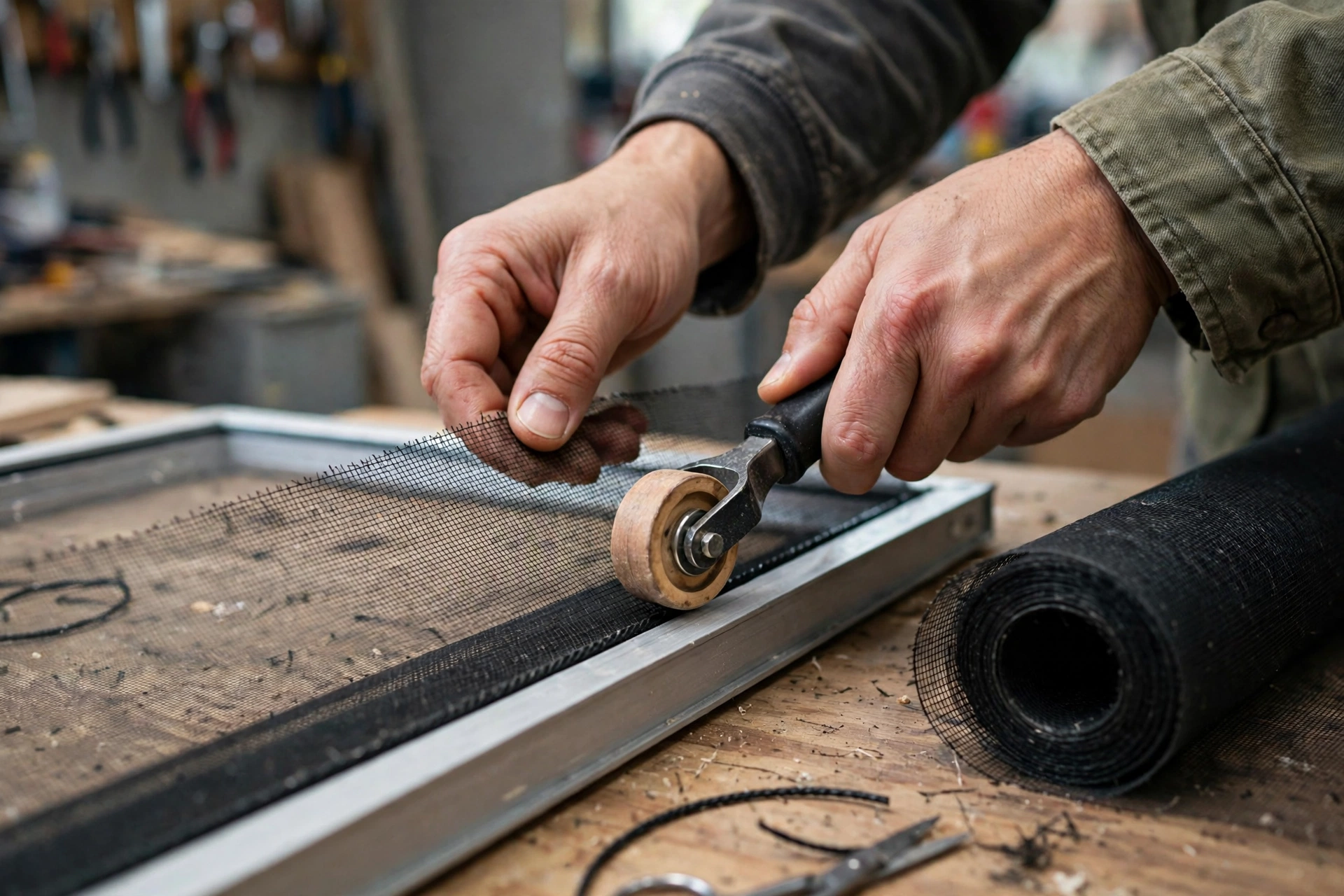
Lay the mesh over the frame, keeping it aligned with the edges. Use a screen rolling tool to press the spline into the groove gradually.
Work carefully around the frame rather than forcing one side into place all at once. This helps distribute tension more evenly and reduces the chance of wrinkles.
Step 5: Trim the Excess Material
Once the spline is fully seated, trim the extra mesh with a sharp utility knife or suitable cutting tool. Keep the blade angled away from the installed screen to avoid cutting the finished material.
Check that the screen remains flat and the spline is secure before reinstalling it.
Choosing the Correct Spline Size
Spline sizing is one of the most important details in a successful screen repair. A spline that is too small may not hold the mesh securely, while one that is too large may be difficult to install or could damage the channel.
Measure the Spline Channel
The correct spline depends on the channel’s dimensions, the frame design, and the thickness of the replacement mesh. A visual estimate alone may not be accurate enough.
If possible, remove a short section of the existing spline and measure its diameter or width. Compare this measurement with the frame manufacturer’s specifications or a compatible spline sizing guide.
Match the Spline to the Mesh
Thicker materials, such as some pet-resistant screens, may require a different spline size from standard fiberglass mesh. However, thicker mesh does not automatically mean a larger spline will fit the frame.
Check compatibility between the screen material, spline, and channel before installation. Using the correct combination helps prevent loose edges, damaged grooves, and installation difficulties.
Avoid Forcing an Incorrect Spline
If the spline requires excessive force to enter the channel, stop and check its size and compatibility. Forcing it into place can deform the frame or damage the channel.
Likewise, if the spline slips out easily after installation, it may be undersized, worn, or incompatible with the frame.
Screen Mesh Tensioning: Avoiding Wrinkles and Sagging
Correct tension is essential for a neat, functional screen. Mesh that is too loose can sag, while mesh pulled too tightly may distort the frame or create uneven edges.
Apply Even Pressure
Use a screen rolling tool to press the spline into the channel in controlled stages. Keep the mesh aligned as you work and check the opposite edges regularly.
The goal is to remove visible wrinkles without stretching the material excessively.
Watch for Frame Distortion
Lightweight frames can bend when too much tension is applied. If the sides begin bowing inward or the corners shift, release the tension and reposition the mesh.
Larger frames and heavier screening materials may require additional care to maintain a square shape.
Check the Finished Screen
After installation, inspect the screen from several angles. Look for wrinkles, loose spline sections, uneven edges, and gaps that could allow insects inside.
A well-installed screen should sit evenly in its frame without excessive tension or visible sagging.
Replacing Window Screen Frame Corner Keys
Corner keys, sometimes called corner connectors, join the frame pieces and help keep the screen square. These small components can crack, loosen, or break, especially when a screen is removed frequently or exposed to impact.
Signs That Corner Keys Need Replacement
Common warning signs include:
Frame pieces separating at the corners.
A screen that no longer sits square.
Cracked or missing connectors.
Loose joints that cause the frame to wobble.
Difficulty fitting the screen properly into its window opening.
How Corner Key Replacement Works
To replace a damaged corner key, the frame generally needs to be partially disassembled. The old connector is removed, the frame ends are checked for damage, and a compatible replacement is fitted.
Corner keys vary by frame profile, dimensions, and material. A connector that looks similar may not fit securely, so measuring the frame and matching the original hardware is important.
If the frame ends are badly bent or the aluminum is damaged, replacing the entire frame may be more practical.
Fix a Torn Window Screen: Repair or Replace?
Homeowners looking to fix a torn window screen should consider the size of the tear, the condition of the surrounding mesh, and the screen’s purpose.
A small tear in otherwise healthy mesh may be suitable for a patch. However, a large opening, multiple tears, or brittle material usually indicates that replacing the mesh will produce a better result.
Pet-related damage deserves particular attention. Replacing standard mesh with pet-resistant screening may help reduce repeated repairs, provided the frame and spline are compatible with the heavier material.
If the damage affects the frame or corner hardware as well as the mesh, repairing only the torn section may not solve the underlying problem.
Maintaining Repaired and Replacement Window Screens
Routine maintenance helps extend the useful life of window screens and makes it easier to identify problems early.
Clean Screens Gently
Remove loose dust and debris with a soft brush or gentle vacuum attachment. For more thorough cleaning, use mild soapy water and a soft cloth or brush when appropriate for the material.
Avoid harsh chemicals, abrasive tools, or excessive pressure that could stretch the mesh or damage its coating.
Inspect Frames and Hardware
Periodically check the frame corners, spline edges, and mounting points. Look for loose connectors, bent rails, and sections where the mesh has begun to separate from the frame.
Addressing these issues early may prevent more extensive damage.
Store Removable Screens Carefully
If screens are removed seasonally, store them in a dry location where they will not be bent, crushed, or exposed to unnecessary pressure. Keep heavy objects away from stored screens, and avoid stacking them in a way that distorts the frames.
Consider Sun Exposure
Screens exposed to intense sunlight may deteriorate more quickly depending on the mesh material. If fading or brittleness appears repeatedly, consider whether a different material or a solar screening option better suits the window’s conditions.
Professional Window Screen Repair and Replacement
DIY rescreening can be suitable for simple repairs, but some situations benefit from professional assistance. Bent frames, unusual spline channels, oversized screens, specialized solar mesh, and pet-resistant materials may require careful measurement and compatible hardware.
Sparkle Windows can be a starting point for discussing your window screen needs, including whether the existing frame can be retained or replacement components may be necessary. Before arranging service, confirm the specific screen repair and replacement options available.
When comparing solutions, ask about mesh type, material compatibility, frame condition, and the expected maintenance requirements. This helps you choose a repair that addresses the actual problem instead of simply covering visible damage.
Conclusion
Effective window screen repair and replacement involves more than installing new mesh. Spline sizing, even tension, compatible corner keys, and the right screen material all contribute to a secure and professional-looking result.
Standard fiberglass and aluminum screens can meet many everyday needs, while pet-resistant mesh may suit households with animals and solar screening may help manage sunlight and glare. The best choice depends on the window, the existing frame, and your priorities for airflow, visibility, durability, and solar performance.
By inspecting screens regularly and repairing problems before they worsen, homeowners can maintain functional window screens and reduce avoidable replacement costs. Whether you need to rescreen a window frame, replace damaged corner hardware, or select a more durable mesh, choosing compatible materials and using careful installation techniques makes a meaningful difference.