Solar panels are designed to convert sunlight into electricity, helping homeowners and businesses reduce their dependence on traditional energy sources. However, dust, pollen, bird droppings, leaves, and other environmental contaminants can accumulate on panel surfaces and reduce the amount of sunlight reaching photovoltaic cells. Over time, this buildup may affect energy production and the overall performance of a solar energy system.
Regular maintenance is an important part of keeping solar panels operating efficiently. While rain can wash away some loose dirt, it may not remove stubborn deposits or accumulated grime. Professional cleaning helps address these issues using appropriate equipment and techniques that protect the panel surface.
At Sparkle Windows, we understand the importance of maintaining clean exterior surfaces. In this guide, we explain how solar panel cleaning services work, why cleaning can improve photovoltaic performance, which tools professionals use, and what homeowners should consider when planning solar panel maintenance.
Why Are Solar Panel Cleaning Services Important?
Solar panels need adequate sunlight to generate electricity efficiently. When dirt and other contaminants accumulate on the glass surface, they can block or scatter some incoming sunlight. The resulting impact depends on the amount and type of contamination, the local environment, panel design, and weather conditions.
Properties located near construction sites, agricultural areas, busy roads, or dusty landscapes may experience faster dirt accumulation. Bird droppings and sticky organic residue can also remain on the surface after rainfall.
Professional solar panel cleaning services help remove these contaminants while reducing the risk of scratching the glass or damaging surrounding components.
Regular cleaning can provide several benefits:
Improved sunlight exposure: Removing dirt helps more sunlight reach the photovoltaic cells.
Better energy performance: Cleaning may help recover output lost because of surface contamination.
Reduced stubborn buildup: Professional techniques can address deposits that ordinary rainfall does not remove.
Protection of panel surfaces: Suitable tools and water quality help minimize cleaning-related damage.
More effective maintenance: Routine inspections during cleaning may reveal visible dirt accumulation, damaged glass, or other concerns requiring further attention.
Cleaning is not a guarantee of increased electricity production in every situation. Panels that are already clean may experience little or no measurable improvement after washing.
How Much Efficiency Can Dirty Solar Panels Lose?
One of the most common questions about solar maintenance is how much energy production can be lost when panels become dirty.
The answer varies significantly. Light dust may have only a small effect, while heavy soiling, persistent bird droppings, or thick layers of accumulated debris can cause more substantial reductions.
In severe conditions, energy losses may reach 25% or more, but this should not be treated as a typical loss for every solar installation. The actual impact depends on environmental conditions, the type of contamination, panel configuration, and how long the buildup remains.
Factors That Influence Solar Panel Performance
Dust and airborne particles: Fine dust can form a thin layer over the glass, reducing light transmission. Dry climates and nearby construction activity may increase accumulation.
Bird droppings: These deposits can block sunlight from reaching particular areas of a panel. Depending on their location and severity, they may also affect the performance of interconnected cells.
Pollen and organic residue: Seasonal pollen can create a film on panel surfaces, especially near trees and vegetation.
Rainfall patterns: Rain may remove loose dust, but it can also leave mineral deposits or fail to dislodge sticky contaminants.
Panel angle: Panels installed at a steeper angle may shed some debris more easily than flatter installations, although the effect depends on the type of contamination and local weather.
Can Cleaning Boost Solar Output?
Yes, cleaning can help boost solar output when accumulated dirt is restricting sunlight. However, the improvement depends on how much performance was lost before cleaning.
For example, if a system is producing less electricity because of heavy surface contamination, removing the buildup may help restore some of its lost output. If reduced production is caused by shading, faulty equipment, inverter issues, or degraded components, cleaning alone will not resolve the underlying problem.
Monitoring electricity production before and after cleaning can help property owners evaluate whether maintenance has made a measurable difference.
How Professional Solar Panel Washers Clean Panels Safely
A professional solar panel washer uses appropriate equipment and techniques to remove dirt without unnecessarily stressing the glass, frame, seals, or electrical components.
Solar panels should not be cleaned like every other exterior surface. High-pressure washing, abrasive brushes, and unsuitable chemicals may cause damage or affect the manufacturer’s warranty.
Professional cleaning generally involves several steps.
Step 1: Inspect the Solar Array
Before cleaning begins, the technician assesses the panel surfaces and surrounding installation. Visible cracks, damaged frames, loose wiring, and other problems should be identified before water or cleaning equipment is introduced.
The technician also considers roof access, panel positioning, weather conditions, and the manufacturer’s maintenance instructions.
Step 2: Select Suitable Water and Equipment
Water quality is important because minerals in ordinary tap water can leave spots or residue as the surface dries.
Many professional systems use purified or deionized water to reduce mineral deposits. The appropriate cleaning method depends on the panel manufacturer’s guidance and the condition of the installation.
Step 3: Remove Surface Contamination
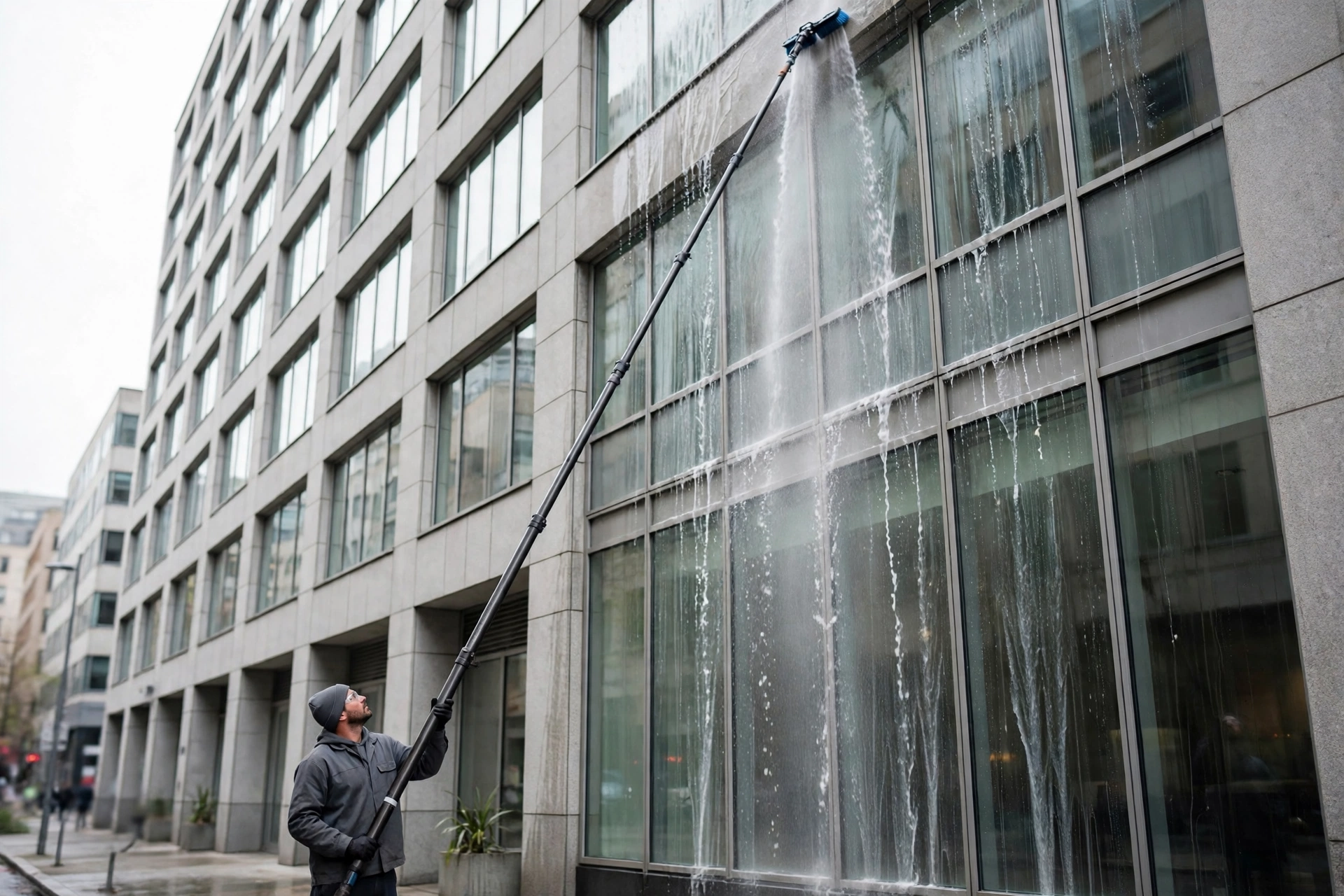
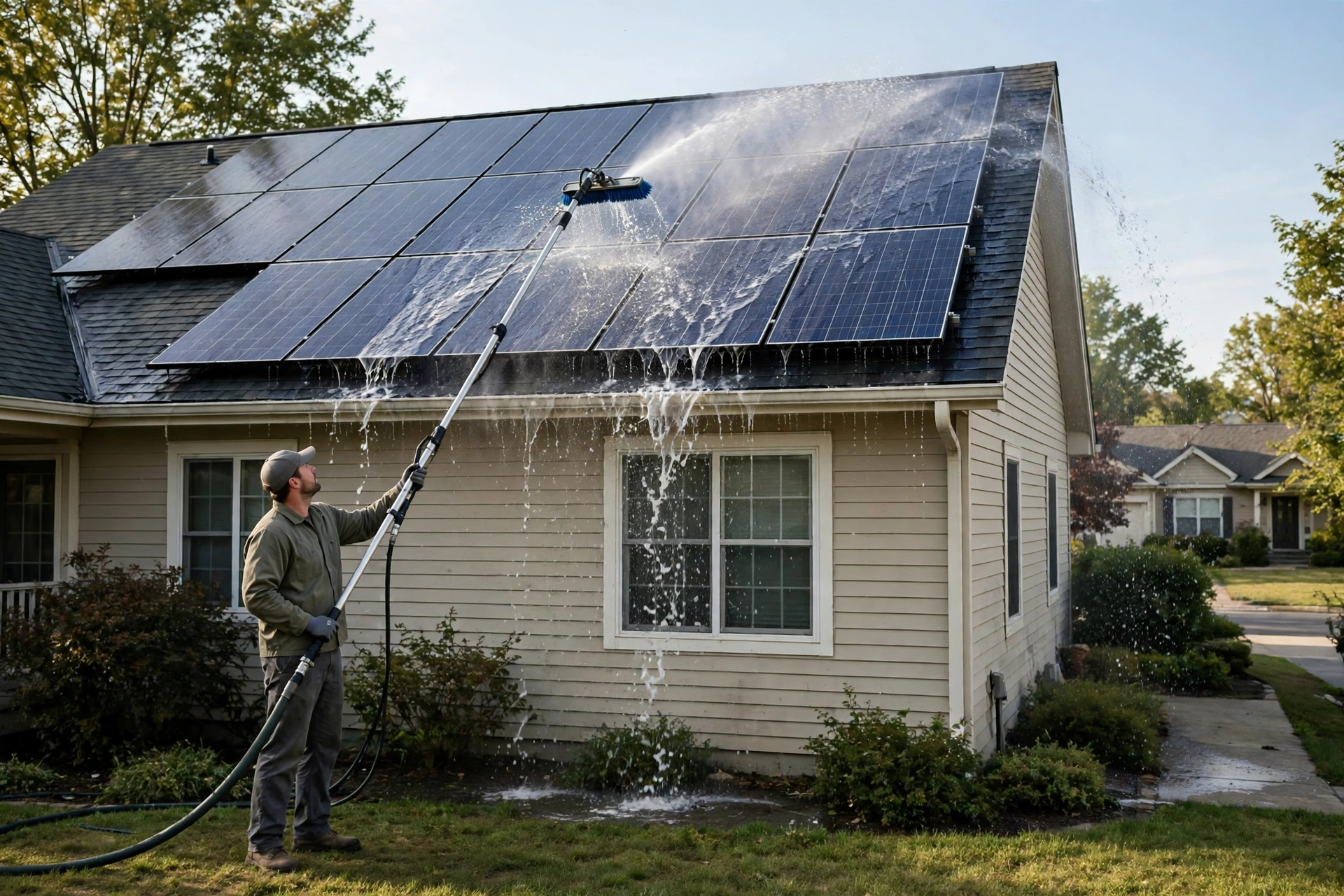
A soft-bristle brush attached to a suitable water-fed pole can help loosen dust, pollen, and other deposits. The brush should be compatible with solar panel glass and free of abrasive particles.
Gentle brushing helps reduce the risk of scratching while allowing the technician to reach suitable panel surfaces from an appropriate working position.
Step 4: Rinse and Check the Results
After loose contamination has been removed, the panels are rinsed according to the cleaning system’s instructions. Purified water can help reduce streaking and mineral residue.
A final visual check helps identify remaining deposits and any visible issues that may require further inspection.
Why Clean Solar Panels With Pure Water?
Using pure water is a common approach in professional solar panel maintenance because ordinary water may contain dissolved minerals such as calcium and magnesium.
When tap water evaporates, these minerals can remain on the glass as spots or deposits. Such residue can make panels look dirty again and may require additional cleaning.
Purified or deionized water has had many of these dissolved impurities removed.
Benefits of Purified Water Cleaning
Fewer mineral spots: Reduced mineral content helps limit residue after rinsing.
Cleaner glass surfaces: Pure water supports a clear finish when used correctly.
Reduced reliance on detergents: Many routine cleaning jobs can be completed without soaps or chemical cleaning agents.
Compatibility with suitable brush systems: Water-fed pole equipment can deliver purified water directly to the panel surface.
Although pure water is useful, it does not eliminate the need for proper technique. Contaminated brushes, abrasive materials, excessive pressure, or unsuitable cleaning conditions can still damage panels.
Cleaning procedures should always follow the solar panel manufacturer’s instructions.
The Importance of Soft-Bristle Pole Brushes
Soft-bristle pole brushes are valuable tools for removing dirt from solar panels without relying on aggressive scrubbing.
Solar panel glass is designed for outdoor exposure, but its surface can still be scratched by abrasive particles or inappropriate cleaning tools. Scratches and damage may affect the panel’s condition and could create warranty concerns.
A suitable brush helps loosen surface contaminants while reducing unnecessary friction.
Best Practices for Brush Cleaning
Choose non-abrasive bristles: Brushes should be specifically suitable for solar panel cleaning or approved for the panel’s surface.
Check for trapped debris: Grit and dirt caught between the bristles and glass can cause scratches.
Use controlled movements: Gentle, consistent brushing is preferable to forceful scrubbing.
Avoid unsuitable household tools: Rough sponges, scouring pads, and abrasive cleaning products should not be used on solar panel glass.
Follow manufacturer recommendations: Some panel coatings or installation designs may require particular tools or cleaning procedures.
The goal is to remove contamination effectively without introducing additional wear.
How Much Does Solar Array Cleaning Cost?
Solar array cleaning cost varies depending on the size of the installation, the amount of dirt present, accessibility, and the equipment needed to complete the job safely.
A small residential system may require less time and equipment than a large commercial solar installation spread across multiple roof sections.
Several factors can influence the final estimate.
Number and Size of Panels
Larger systems generally require more cleaning time. The total number of modules and their arrangement affect the amount of work involved.
Roof Height and Accessibility
Panels installed on a low, accessible roof may be easier to reach than those positioned on a steep or multi-story building. Difficult access may require additional safety equipment and labor.
Level of Contamination
Light dust usually requires less effort to remove than dried bird droppings, heavy grime, or long-standing deposits.
Equipment and Water Systems
Professional water-fed poles, purified water systems, and suitable safety equipment contribute to the service requirements.
Residential vs. Commercial Installations
Commercial solar arrays may involve many more panels, larger working areas, and additional scheduling considerations. Their cleaning requirements can differ considerably from those of residential properties.
Because these factors vary, property owners should request a quote based on the specific installation. A useful estimate should explain which panels are included, how access will be managed, and whether any additional services are necessary.
How Often Should Solar Panels Be Cleaned?
There is no universal cleaning schedule for every solar installation. Some systems remain relatively clean with occasional rainfall, while others accumulate dust or organic debris quickly.
In general, homeowners should monitor their panels and arrange cleaning when visible contamination or performance data indicates that maintenance may be beneficial.
More frequent inspections may be appropriate for properties near dusty roads, construction sites, agricultural land, or areas with heavy bird activity.
Consider scheduling an assessment when you notice:
Persistent dirt or visible deposits on the glass.
Bird droppings that remain after rainfall.
Unusual differences in electricity production.
Dust buildup following construction or nearby landscaping work.
Seasonal pollen or other contaminants accumulating on the panels.
Electricity production should also be evaluated against weather conditions and seasonal changes. Shorter daylight hours, cloud cover, shading, and temperature can affect output independently of cleanliness.
Solar Panel Cleaning Safety: What Property Owners Should Know
Solar panel maintenance involves more than keeping the glass clean. Panels are electrical equipment, and rooftop installations introduce fall risks, fragile surfaces, and possible exposure to live electrical components.
Homeowners should avoid climbing onto roofs without appropriate training and fall protection. Walking directly on solar panels can damage the modules and should be avoided.
Other important precautions include:
Following the manufacturer’s cleaning and shutdown instructions.
Avoiding high-pressure jets directed at panel edges, connectors, or electrical components.
Never using abrasive materials that can scratch the glass.
Avoiding cleaning during unsuitable conditions, including dangerously hot surfaces or adverse weather.
Using appropriate access equipment and fall-protection measures.
Referring electrical faults or damaged components to qualified professionals.
Cleaning should not involve opening electrical enclosures or attempting repairs unless the person is appropriately qualified.
Professional assistance can help property owners manage access and cleaning requirements while reducing avoidable risks.
Why Choose Sparkle Windows for Exterior Cleaning?
Maintaining clean exterior surfaces requires the right tools, suitable cleaning methods, and attention to the materials being cleaned. Solar panels deserve particular care because improper techniques can cause damage that may be expensive to address.
Sparkle Windows understands the importance of careful exterior maintenance. When planning solar panel cleaning, property owners should look for a provider who understands the installation’s cleaning requirements, uses suitable non-abrasive tools, and follows manufacturer guidance.
Before arranging a service, consider the number of panels, the location of the installation, visible contamination, and any access challenges. These details can help determine the most appropriate cleaning approach and support a more accurate estimate.
If your property also requires window or other exterior cleaning, discussing your maintenance needs together may help you plan services more efficiently.
Final Thoughts
Solar panel cleaning services can help maintain clean glass surfaces and recover energy production lost to dirt and debris. The results depend on the severity of contamination, local environmental conditions, and the overall condition of the solar installation.
Using purified or deionized water, suitable soft-bristle pole brushes, and careful cleaning techniques can help remove buildup while reducing the risk of scratches and mineral residue. Equally important are safe access practices and compliance with the manufacturer’s maintenance recommendations.
For homeowners and businesses, the best approach is to monitor panel cleanliness, evaluate energy production, and schedule maintenance when it is needed rather than assuming that every system requires the same cleaning frequency.
Looking to maintain your property’s exterior? Contact Sparkle Windows to discuss your cleaning needs and explore suitable maintenance options for your property.