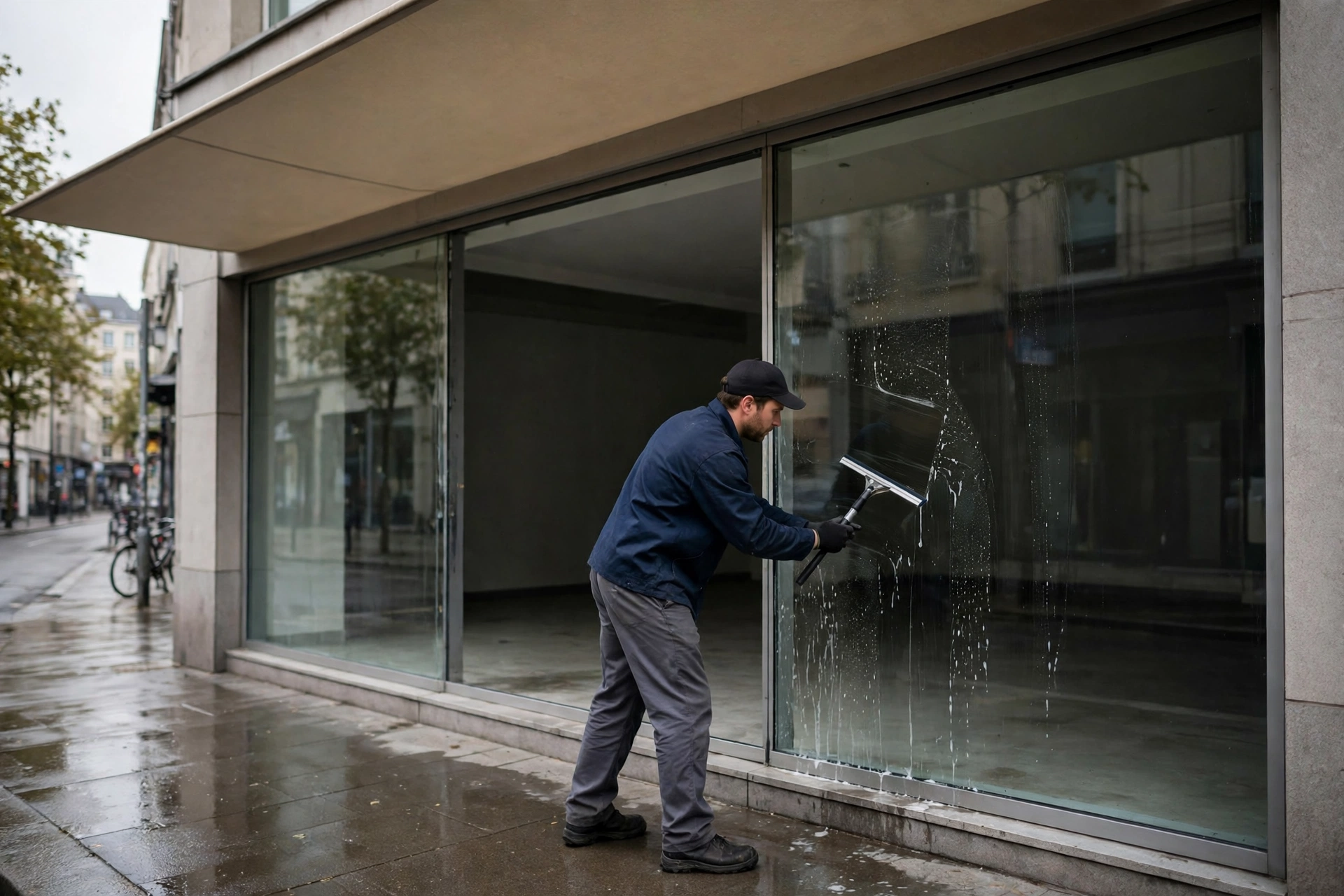
Clean windows are an important part of maintaining a professional commercial property. From corporate offices and hotels to multi-story residential buildings, spotless exterior glass enhances curb appeal, allows natural light into interior spaces, and creates a positive impression for employees, visitors, and customers. However, cleaning windows at significant heights requires specialized equipment, trained professionals, and carefully planned safety procedures.
Commercial high rise window cleaning involves more than removing dirt, dust, and water spots. It requires a thorough understanding of fall protection, rope access systems, aerial equipment, weather conditions, and workplace safety regulations. Building managers must also evaluate contractor qualifications, liability insurance, and procedures for protecting workers and pedestrians.
At Sparkle Windows LLC, we recognize the importance of professional window maintenance and responsible property care. Understanding high-rise cleaning methods and safety protocols helps property owners make informed decisions when selecting service providers and planning exterior maintenance.
Why Commercial High-Rise Window Cleaning Requires Specialized Expertise
High-rise buildings present unique cleaning challenges because of their height, architectural design, exposed surfaces, and limited exterior access. Wind, rain, airborne pollutants, and mineral deposits can gradually affect glass clarity and the appearance of a building.
Unlike ground-level window washing, high-rise work may require technicians to operate suspended equipment or elevated platforms while managing changing weather conditions and potential hazards.
Common Challenges in High-Rise Window Cleaning
Professional commercial exterior glass cleaning involves several important considerations:
Fall hazards: Workers operating at height require appropriate protection and properly configured equipment.
Weather exposure: Strong winds, lightning, and other adverse conditions can make exterior cleaning unsafe.
Complex building designs: Curved glass, recessed windows, overhangs, and irregular facades can complicate access.
Public safety: Falling tools or equipment can cause serious injuries to pedestrians and people entering the building.
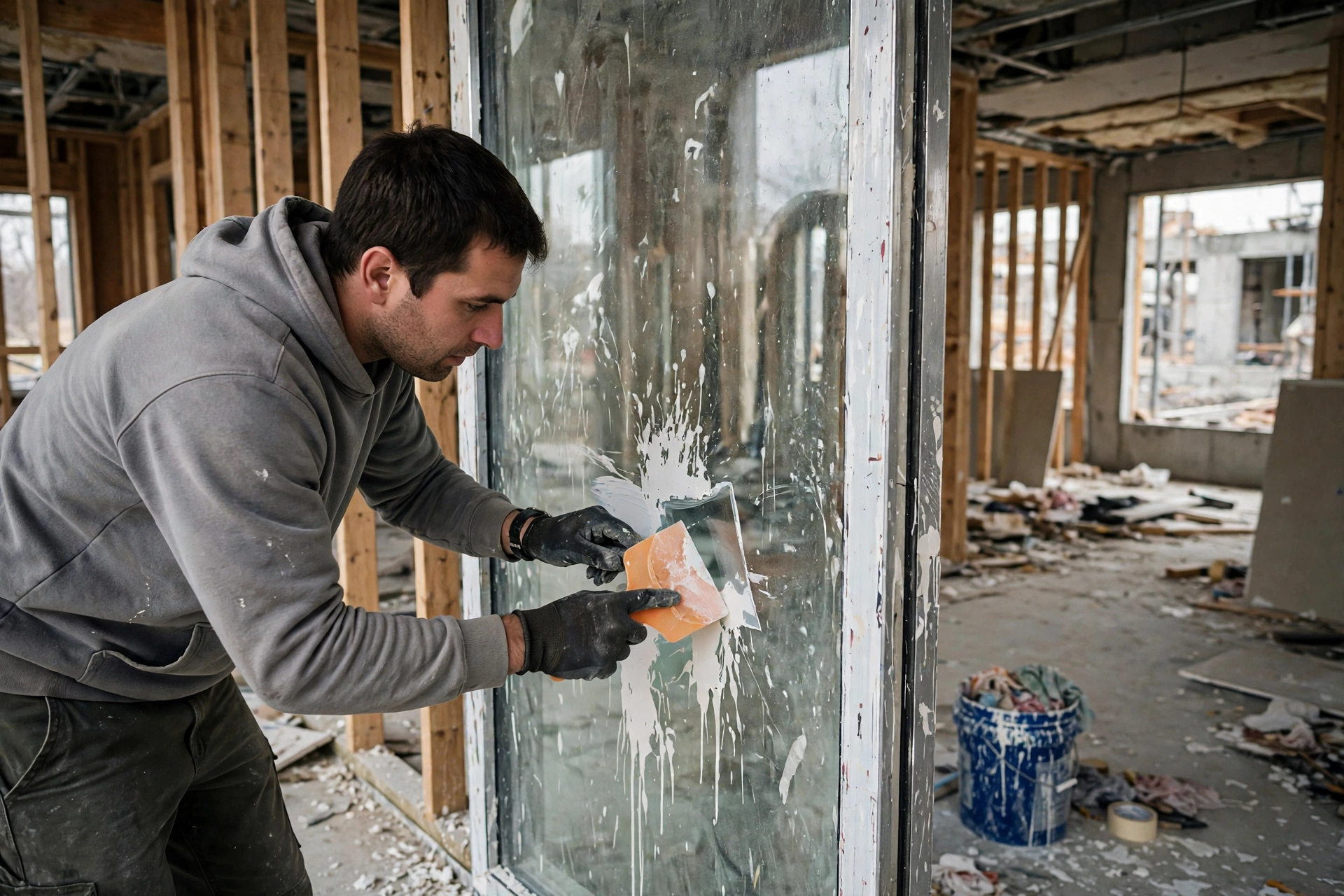
Glass protection: Incorrect cleaning techniques can scratch glass, damage protective coatings, or affect surrounding seals.
These challenges make careful planning essential. Before work begins, a qualified contractor should inspect the building, identify hazards, and determine the most appropriate access method.
Understanding OSHA Safety Standards for High-Rise Window Cleaning
In the United States, the Occupational Safety and Health Administration (OSHA) establishes workplace safety requirements relevant to window cleaning, fall protection, scaffolds, aerial lifts, and other elevated work activities.
The specific requirements depend on the equipment, working conditions, and type of operation. Employers must identify the standards that apply to their particular cleaning method rather than assuming that one general rule covers every situation.
Fall Protection and Worker Training
High-rise window cleaning companies should maintain documented safety procedures covering equipment selection, worker training, inspections, hazard identification, and emergency response.
Employees need to understand how to operate their equipment, recognize unsafe conditions, and follow established procedures while working at elevation.
Important safety considerations include:
Appropriate personal fall protection equipment.
Suitable and verified anchorage systems.
Compatible ropes, connectors, harnesses, and descent devices.
Regular equipment inspections and maintenance records.
Training in safe operation and emergency procedures.
Restricted access to areas exposed to falling-object hazards.
Why OSHA Compliance Requires More Than Safety Gear
A harness alone does not make high-rise window cleaning safe. The complete system must be appropriate for the task, properly configured, and used by trained personnel.
Building managers should ask contractors how they assess hazards, verify anchorages, inspect equipment, and prepare for emergencies.
For official requirements and guidance, consult the OSHA website at https://www.osha.gov/.
Rope Access Window Cleaning and Rope Descent Systems
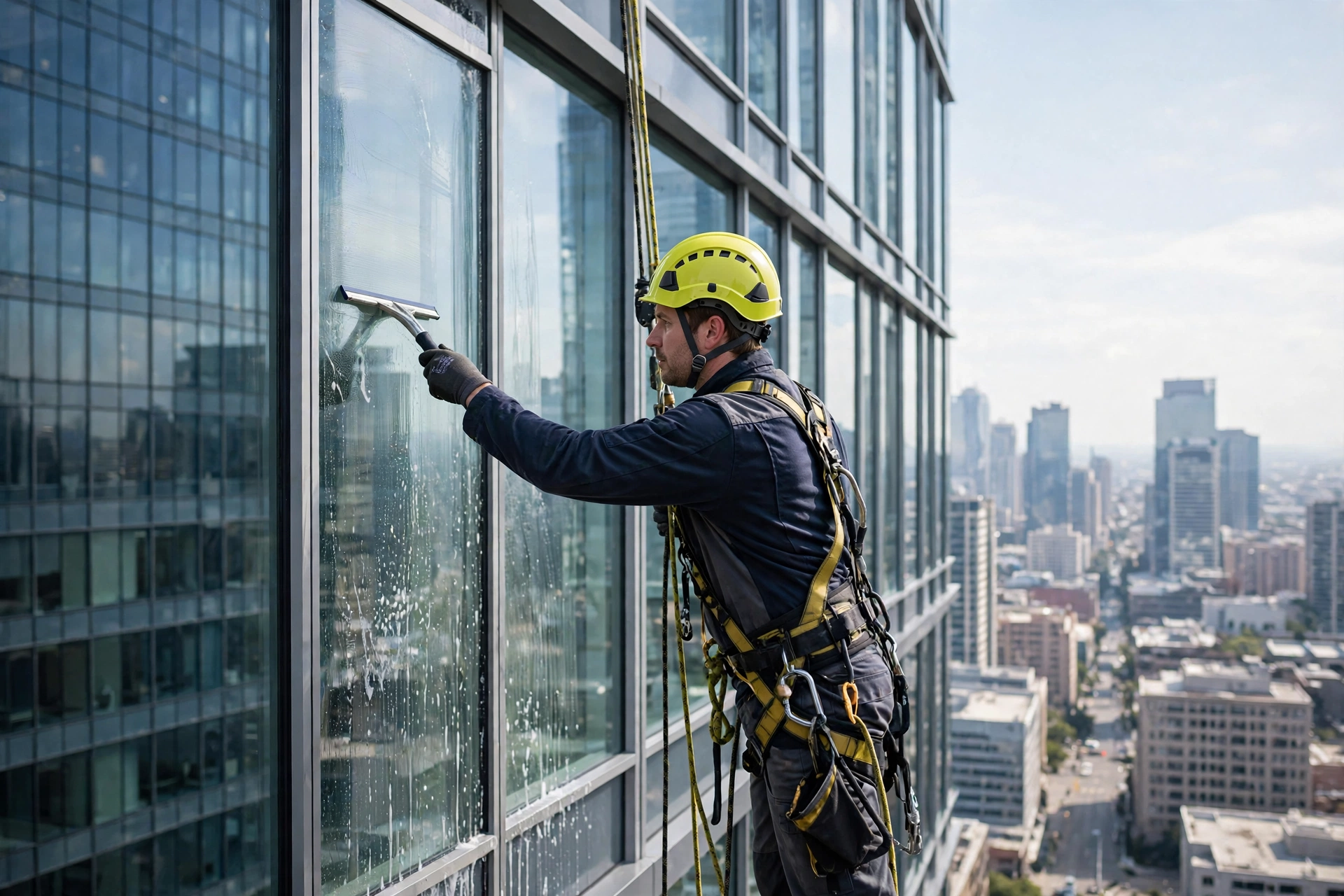
Rope access window cleaning allows trained technicians to reach exterior glass using specialized suspension and descent equipment. It is particularly useful for certain tall buildings where conventional equipment may be impractical.
A rope descent system (RDS) typically uses a suspension rope, a compatible descent device, a full-body harness, and an appropriate anchorage arrangement. Other components and protective measures depend on the specific system and applicable requirements.
How Rope Descent Systems Work
In a typical operation, qualified personnel establish an approved access arrangement at the roof or another suitable location. Technicians then descend along the building facade while cleaning designated sections of glass.
The system must be designed and operated according to applicable regulations, equipment instructions, and the conditions of the building.
Essential Rope System Safety Checks
Before a descent begins, contractors should verify several critical elements:
Anchorage verification: Confirm that the anchorage is suitable for the intended loads and system configuration.
Rope inspection: Check for cuts, abrasion, contamination, deterioration, and other damage.
Harness inspection: Examine webbing, buckles, stitching, and connectors.
Equipment compatibility: Verify that ropes, descent devices, and connectors are compatible.
Edge protection: Protect ropes from sharp or abrasive roof edges when necessary.
Emergency readiness: Establish a practical rescue procedure before work begins.
Planning for Emergencies
Even properly maintained equipment cannot eliminate every hazard. A worker may become incapacitated, equipment may fail, or unexpected building conditions may create an emergency.
A suitable rescue plan should address building height, available access points, communication methods, trained personnel, and the time required to assist a suspended worker.
Contractors should establish these procedures before work begins instead of relying exclusively on emergency services after an incident.
Bosun’s Chairs for Suspended Window Cleaning
A bosun’s chair is a suspended seat used for certain types of elevated maintenance work. In window cleaning, it can provide a compact working position when the building layout and task make this equipment appropriate.
The chair is part of a larger suspension arrangement and should not be treated as a complete fall protection system on its own.
When Is a Bosun’s Chair Appropriate?
A bosun’s chair may be suitable for selected vertical cleaning tasks where a larger suspended platform would be unnecessary or impractical.
The decision depends on the building’s design, the work involved, applicable regulations, and the equipment manufacturer’s instructions.
Safety Considerations for Suspended Chairs
Before using a bosun’s chair, contractors should evaluate the complete system and verify that all required protective measures are in place.
Important considerations include:
Suitable, verified anchorages.
Compatible suspension equipment.
Properly fitted personal protective equipment.
Pre-use inspections and documented maintenance.
Reliable communication with supervisors or ground personnel.
A job-specific emergency and rescue plan.
Choosing the right equipment requires professional assessment rather than relying on convenience alone.
Aerial Lifts for Commercial Exterior Glass Cleaning
Aerial lifts provide another method of accessing exterior windows. Depending on the property and surrounding site, contractors may use boom lifts, scissor lifts, or other suitable elevating work platforms.
These machines can provide a stable working position and convenient access to certain building elevations.
Benefits of Using Aerial Lifts
Aerial lifts may be useful for lower and mid-rise buildings, accessible facades, and properties with sufficient ground space.
Potential advantages include:
Access to selected exterior elevations.
A platform for suitable cleaning tasks.
Convenient movement between accessible work areas.
Reduced reliance on roof-level rope access for certain jobs.
Aerial Lift Safety Requirements
Aerial lifts are not appropriate for every building. Ground conditions, overhead power lines, nearby structures, traffic, and the machine’s operating limits must be evaluated before use.
Operators must receive the training required for the equipment and follow applicable workplace safety standards.
Preventing Lift-Related Accidents
Before operation, the contractor should inspect the lift, evaluate ground stability, identify overhead hazards, and establish appropriate exclusion zones.
Workers must follow the manufacturer’s instructions for platform loading, movement, fall protection, and operation. Equipment should never be used beyond its rated capacity or permitted operating limits.
Water-Fed Poles and Their Practical Reach Limits
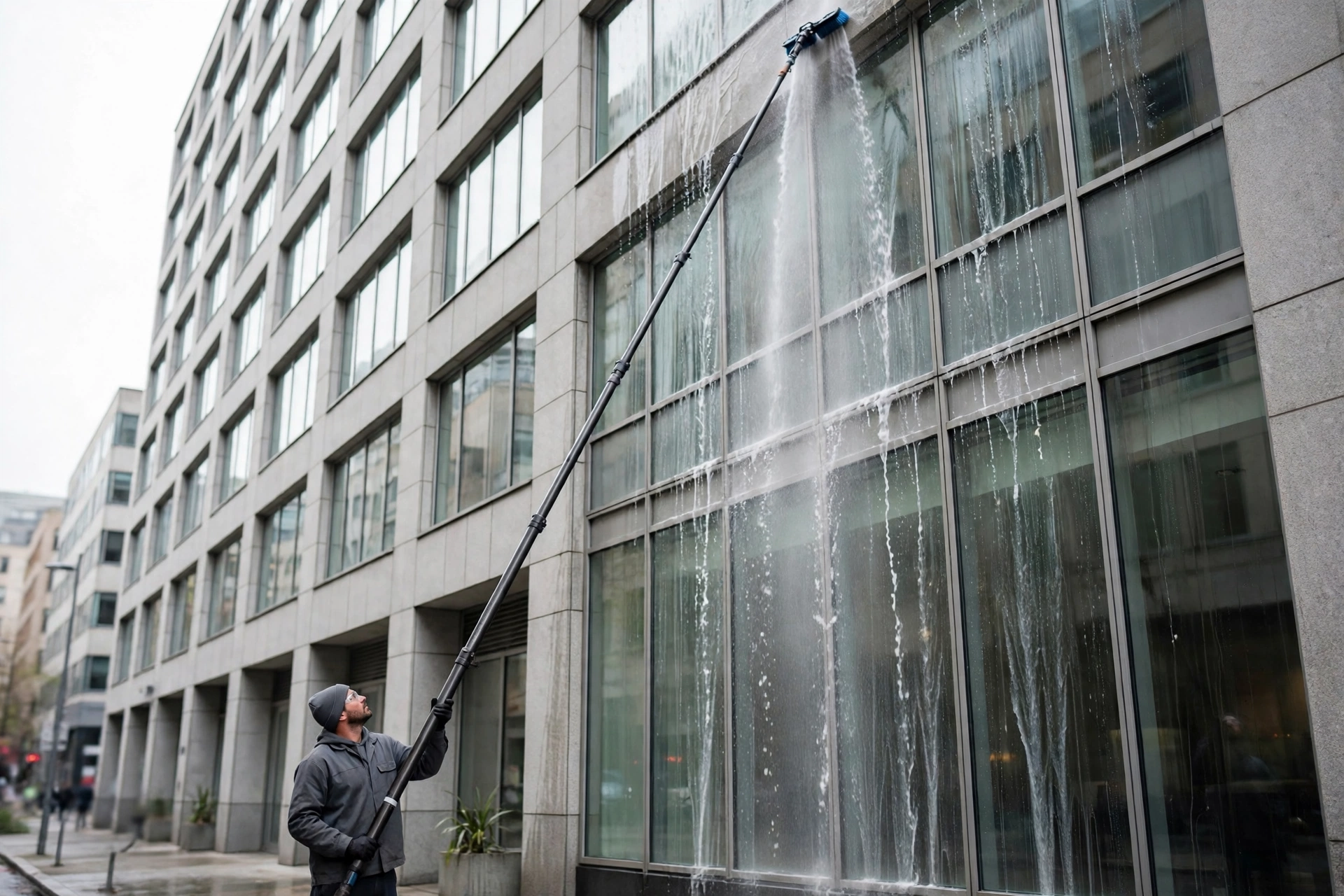
Water-fed pole systems clean glass using telescopic poles, specialized brushes, and purified water. The brush loosens dirt while the water rinses contaminants from the surface.
Because purified water contains fewer dissolved minerals, it can help reduce spotting when the glass is cleaned and rinsed correctly.
How Water-Fed Pole Cleaning Works
A water-fed pole delivers water through a brush attached to an extendable pole. The operator works from a suitable position, using the brush to agitate dirt and the water to rinse the glass.
This method can be efficient for accessible exterior windows and some lower building elevations.
Understanding Water-Fed Pole Reach Limits
Water-fed poles cannot replace every high-rise access method. Practical reach depends on pole design, facade configuration, wind conditions, operator control, and site access.
As pole length increases, maintaining control and consistent brush contact can become more difficult. Deep recesses, overhangs, and inaccessible upper floors may require alternative equipment.
Selecting the Right Cleaning Method
Water-fed poles are often suitable for accessible windows within the practical reach of the equipment. Rope access, aerial lifts, or other approved systems may be necessary for taller or more complex facades.
A professional site assessment helps determine the safest and most efficient approach for each building.
Developing a High-Rise Window Cleaning Safety Plan
A written safety plan coordinates workers, equipment, building management, and the public. It should address the specific building, cleaning method, and environmental conditions.
Conducting a Site Assessment
Before cleaning begins, contractors should evaluate the facade, roof access, anchorage arrangements, surrounding traffic, pedestrian routes, and potential hazards.
The assessment should identify areas where falling objects could cause injury and establish suitable measures for restricting access.
Establishing Work Zones and Communication
Ground-level exclusion zones, warning signs, barriers, and clear communication help protect people near the building.
Workers and supervisors should understand their responsibilities for monitoring weather, coordinating access, authorizing work, and responding to emergencies.
Monitoring Weather Conditions
Wind can affect suspended workers, ropes, cleaning tools, and aerial lifts. Lightning, heavy rain, and other adverse conditions may also create unsafe working conditions.
Contractors should follow equipment-specific operating limits and established stop-work procedures. Work must be paused when conditions become hazardous, regardless of scheduling pressure.
Liability Insurance and Contractor Qualifications
Selecting a qualified window cleaning contractor is an important part of commercial property risk management. Building managers should verify that service providers have suitable experience, trained personnel, appropriate equipment, and insurance coverage for the work.
Types of Insurance to Consider
Depending on the contract and applicable jurisdiction, relevant coverage may include:
Commercial general liability insurance: Covers certain third-party bodily injury and property damage claims, subject to policy terms and exclusions.
Workers’ compensation insurance: Provides coverage required by applicable law for eligible work-related injuries.
Commercial auto insurance: May apply to vehicles used during project operations.
Additional coverage: Certain specialized projects or contractual arrangements may require other policies or endorsements.
Verify Insurance Before Work Begins
Request current certificates of insurance and verify coverage details when necessary. Pay attention to policy limits, exclusions, subcontractor arrangements, and any additional insured requirements in the contract.
Insurance does not replace effective safety procedures, but appropriate coverage can help manage financial risks associated with commercial maintenance.
Why Choose Sparkle Windows LLC?
Maintaining clean exterior glass is an important part of preserving a commercial property’s appearance. Regular window maintenance can help reduce the accumulation of dirt, water spots, and environmental contaminants while supporting a professional image.
Sparkle Windows LLC recognizes the importance of careful window maintenance, appropriate cleaning methods, and responsible property care. For high-rise buildings, selecting an experienced contractor with suitable access equipment and documented safety procedures is especially important.
Property managers should verify worker training, equipment inspection practices, emergency plans, and applicable insurance coverage before authorizing elevated cleaning work.
By making informed maintenance decisions and prioritizing safety, commercial property owners can better protect their buildings, occupants, workers, and surrounding environments.
Frequently Asked Questions
How often should commercial high-rise windows be cleaned?
Cleaning frequency depends on pollution, weather, building location, nearby construction, and appearance requirements. Commercial property managers should establish a schedule based on the building’s conditions and maintenance needs.
What is rope access window cleaning?
Rope access window cleaning uses specialized ropes, descent equipment, and trained technicians to reach exterior glass at height. It can be effective where conventional equipment cannot safely or efficiently access the facade.
Are rope descent systems safe for high-rise cleaning?
Rope descent systems can be appropriate when correctly designed, anchored, inspected, and operated by trained personnel under applicable requirements. Emergency planning and rescue arrangements are essential.
Are water-fed poles suitable for high-rise buildings?
Water-fed poles are useful for accessible windows within the equipment’s practical reach. They generally cannot replace rope access or aerial lifts for every upper-floor or complex facade.
Why is liability insurance important for window cleaning?
Insurance can help manage certain financial risks associated with covered injuries, property damage, and other claims. Building managers should verify coverage and contractual requirements before work begins.
What should building managers check before hiring a window cleaning company?
Review the company’s experience, worker training, equipment inspection procedures, safety planning, emergency response arrangements, references, and insurance documentation.
Final Thoughts
Commercial high-rise window cleaning requires specialized equipment, careful planning, and a strong commitment to worker and public safety. Rope descent systems, bosun’s chairs, aerial lifts, and water-fed poles each serve different purposes, and the appropriate method depends on building design, site conditions, and applicable safety requirements.
By prioritizing OSHA compliance, equipment inspections, worker training, emergency planning, and appropriate insurance, commercial property managers can make informed decisions about exterior glass maintenance.
Sparkle Windows LLC encourages property owners and managers to approach window maintenance with a focus on safety, quality, and long-term building care. Working with qualified professionals helps support a clean, attractive property while maintaining responsible safety practices.