Your home’s exterior is constantly exposed to dust, rain, humidity, mold, mildew, and other environmental contaminants. Over time, these elements can leave siding looking dirty, create stubborn stains, and affect the overall appearance of your property. Regular exterior cleaning helps maintain curb appeal and keeps siding in better condition. However, choosing the right cleaning method is essential to avoid unnecessary damage.
At Sparkle Windows, we understand that different exterior surfaces require different cleaning approaches. While high-pressure washing can be useful for certain durable surfaces, soft washing is often a safer option for delicate siding materials. Understanding the differences between these techniques can help homeowners make informed decisions about their exterior maintenance.
In this guide, we explain how pressure washing house siding works, when soft washing is the better choice, what affects cleaning costs, and how professional exterior cleaning can help protect your property.
Why Is Regular House Siding Cleaning Important?
House siding protects your property from weather conditions while contributing to its overall appearance. Unfortunately, dirt and organic growth can accumulate on siding over time, especially in areas with high humidity, frequent rainfall, or limited sunlight.
Common problems include:
Mold and mildew: Moisture encourages organic growth, particularly on shaded walls and around trees.
Dirt and dust: Airborne particles, pollen, and everyday environmental debris gradually discolor exterior surfaces.
Algae stains: Green or dark streaks can develop where moisture remains on siding.
Cobwebs and insect residue: These contaminants collect around windows, corners, soffits, and exterior fixtures.
Reduced curb appeal: Dirty siding can make an otherwise well-maintained property look neglected.
Routine cleaning removes many of these contaminants before they become more difficult to address. It also gives homeowners an opportunity to identify potential maintenance concerns, such as cracked siding, loose panels, deteriorating caulk, or damaged window seals.
Soft Washing vs. High Pressure: Understanding the Difference
Both soft washing and high-pressure washing use water to clean exterior surfaces, but they rely on different techniques.
What Is Soft Wash House Cleaning?
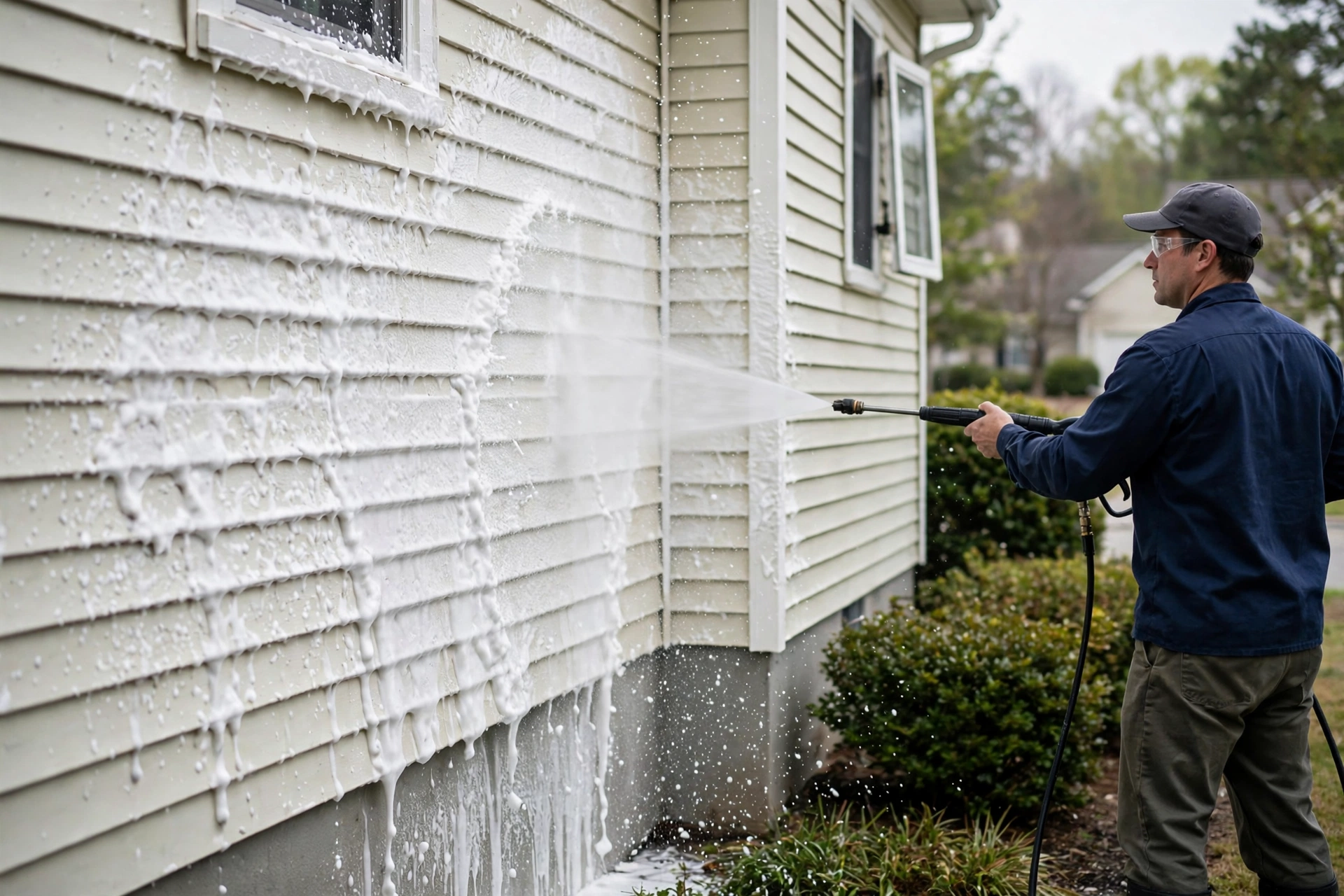
Soft wash house cleaning uses low-pressure water combined with an appropriate cleaning solution to loosen and remove dirt, algae, mold, and mildew. Rather than relying on force alone, the method allows the cleaning solution to work on surface contaminants before they are rinsed away.
This approach is particularly useful for siding materials that could be damaged by excessive water pressure.
Soft washing may be appropriate for:
Vinyl siding
Painted wood siding
Stucco exteriors
Certain composite siding materials
Delicate exterior trim and decorative details
The cleaning solution must be selected according to the surface, the type of contamination, and the manufacturer’s recommendations. Professional cleaners also consider surrounding plants, nearby materials, and the need for appropriate rinsing.
When Is High-Pressure Washing Appropriate?
High-pressure washing uses a stronger stream of water to remove stubborn dirt and buildup. It can be effective on suitable, durable surfaces when the equipment is operated correctly.
However, high pressure is not automatically the best choice for every exterior cleaning project. Excessive pressure can strip paint, damage siding, force water behind panels, or affect seals around windows and doors.
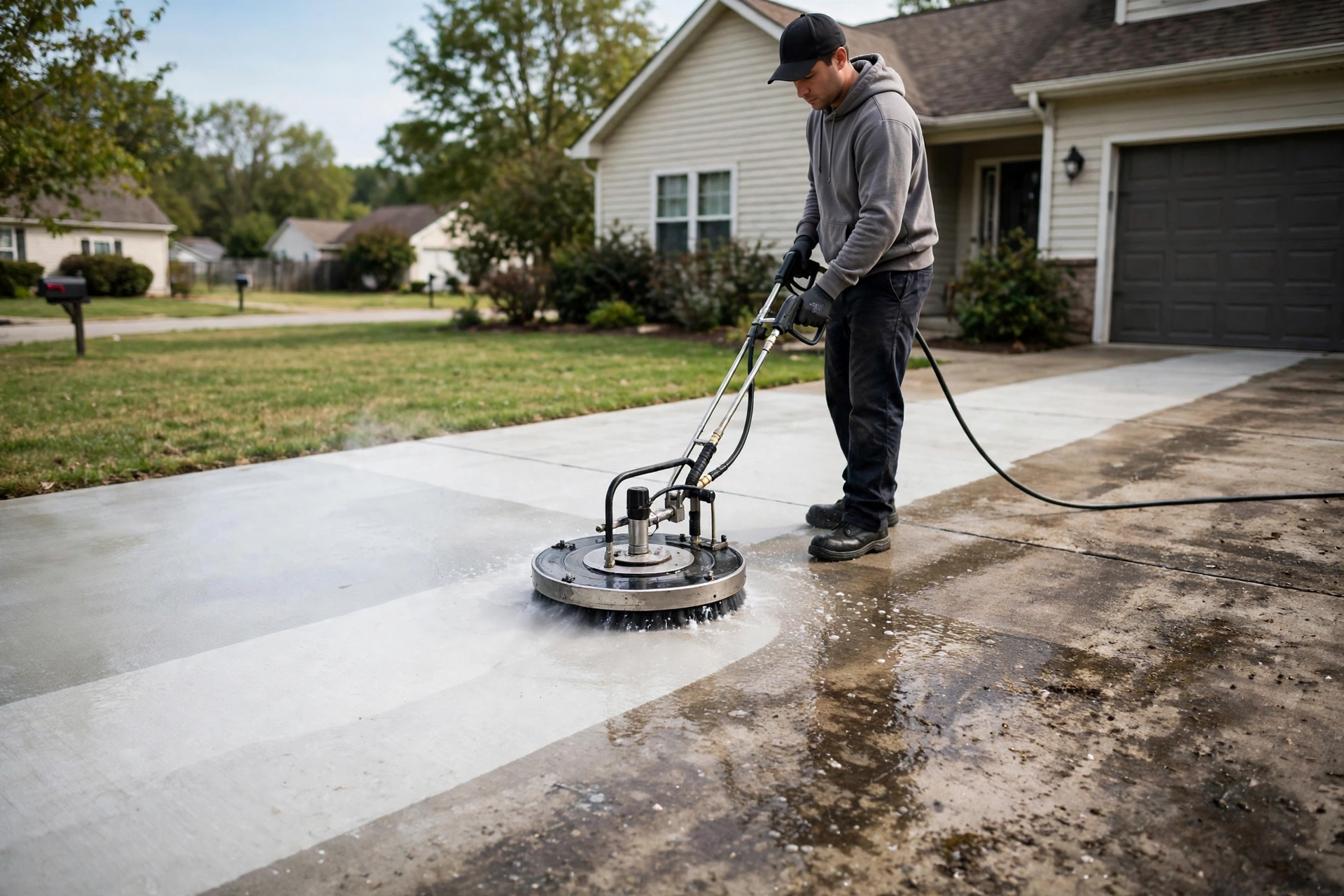
High-pressure cleaning may be suitable for certain concrete surfaces, masonry, and other materials designed to withstand the selected pressure. Even then, the operator must adjust the equipment according to the surface condition.
For most residential siding projects, the goal should be effective cleaning with the least aggressive method necessary.
Choosing the Right PSI for House Siding
PSI, or pounds per square inch, measures water pressure. Understanding PSI settings is important because different materials tolerate different levels of pressure.
There is no single pressure setting that works safely for every type of siding. The correct approach depends on the material, its age, existing damage, nozzle selection, spray distance, and equipment.
Pressure Washing Vinyl Siding
Vinyl siding is durable, but it can still be damaged by an overly forceful water stream. High pressure may loosen panels, drive water behind the siding, or damage trim and nearby seals.
When pressure washing vinyl siding, a low-pressure approach is generally preferable. Soft washing can help remove algae, mildew, and surface dirt without relying on aggressive force.
Cleaners should also avoid spraying upward beneath siding overlaps, where water may enter the wall assembly.
Soft Washing Stucco Walls
Stucco can be particularly sensitive to inappropriate cleaning techniques. Cracks, worn coatings, and deteriorated areas may allow water to penetrate the surface.
Soft washing stucco walls is often preferable because it reduces the risk associated with forceful water application. Before cleaning, the surface should be inspected for cracks, loose material, and existing moisture problems.
Any cleaning solution must be compatible with the stucco finish. A professional may recommend repairs before washing if the exterior shows signs of deterioration.
Cleaning Painted Wood Siding
Painted wood requires additional care because strong pressure can remove paint, damage exposed wood fibers, or push moisture into vulnerable areas.
A gentle cleaning method helps preserve the finish and reduces the likelihood of creating new maintenance problems. If the paint is peeling or the wood is deteriorating, cleaning should be approached cautiously.
The most important rule is to select the cleaning method based on the actual condition of the siding rather than assuming that stronger pressure produces better results.
How Sodium Hypochlorite Solutions Help Remove Mold and Mildew
Sodium hypochlorite is an active ingredient found in many bleach-based cleaning products. When appropriately formulated and used, it can help treat organic growth on suitable exterior surfaces.
In professional exterior cleaning, a sodium hypochlorite-based solution may be used to address algae, mold, and mildew that ordinary water alone may not remove effectively.
However, using these products requires care.
The solution must be diluted according to the product label, the surface being cleaned, and the type of contamination. Stronger concentrations are not necessarily better and can increase the risk of discoloration, material damage, or harm to nearby vegetation.
Professional cleaning practices should include:
Selecting a surface-compatible cleaning product.
Following the manufacturer’s dilution and application instructions.
Protecting plants and nearby outdoor materials.
Managing runoff and preventing unnecessary chemical exposure.
Rinsing surfaces appropriately when required.
Avoiding contact with incompatible chemicals.
Never mix bleach-based products with acids or ammonia, as dangerous gases can be released.
At Sparkle Windows, the appropriate exterior cleaning method should be determined by the property’s materials and cleaning requirements. Careful product selection and application help achieve a cleaner surface while reducing avoidable risks.
Protecting Window Seals During Exterior House Washing
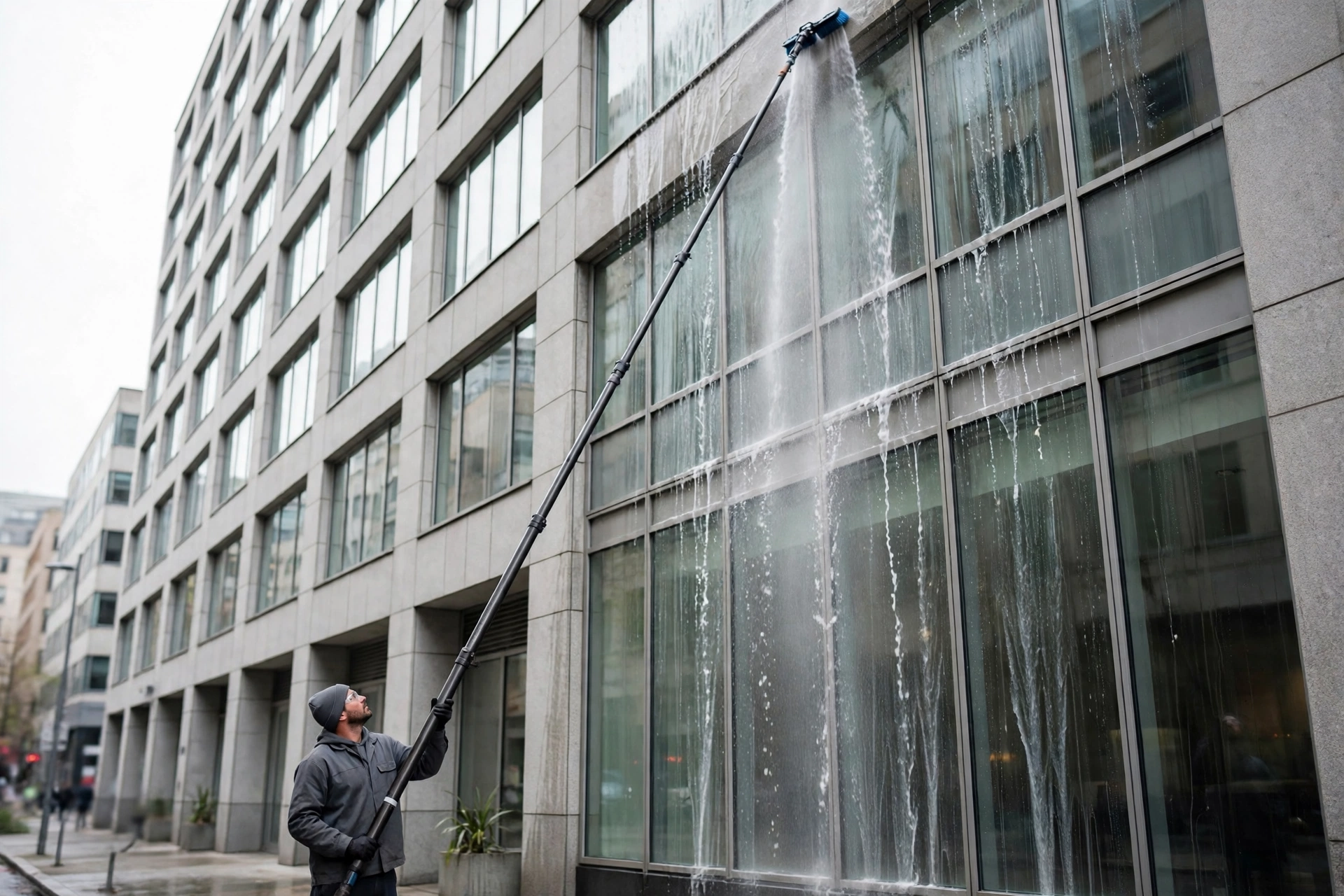
Windows are an important consideration when cleaning house siding. High-pressure water directed toward window frames, weatherstripping, and seals can cause problems, especially if components are old or already damaged.
Water intrusion may affect interior finishes, insulation, and surrounding materials. Cleaning can also expose existing defects that homeowners may not have noticed.
To help prevent damage during exterior house washing, consider these precautions:
Inspect windows first. Look for cracked caulking, loose trim, damaged weatherstripping, and other visible problems.
Avoid direct high-pressure spray. Do not aim a concentrated stream at window edges, seals, or frame joints.
Use appropriate pressure and distance. The safest approach depends on the window design and the condition of the surrounding materials.
Check vulnerable areas. Pay particular attention to older windows and locations where caulk has deteriorated.
Address existing damage. Repair compromised seals or trim before cleaning when necessary.
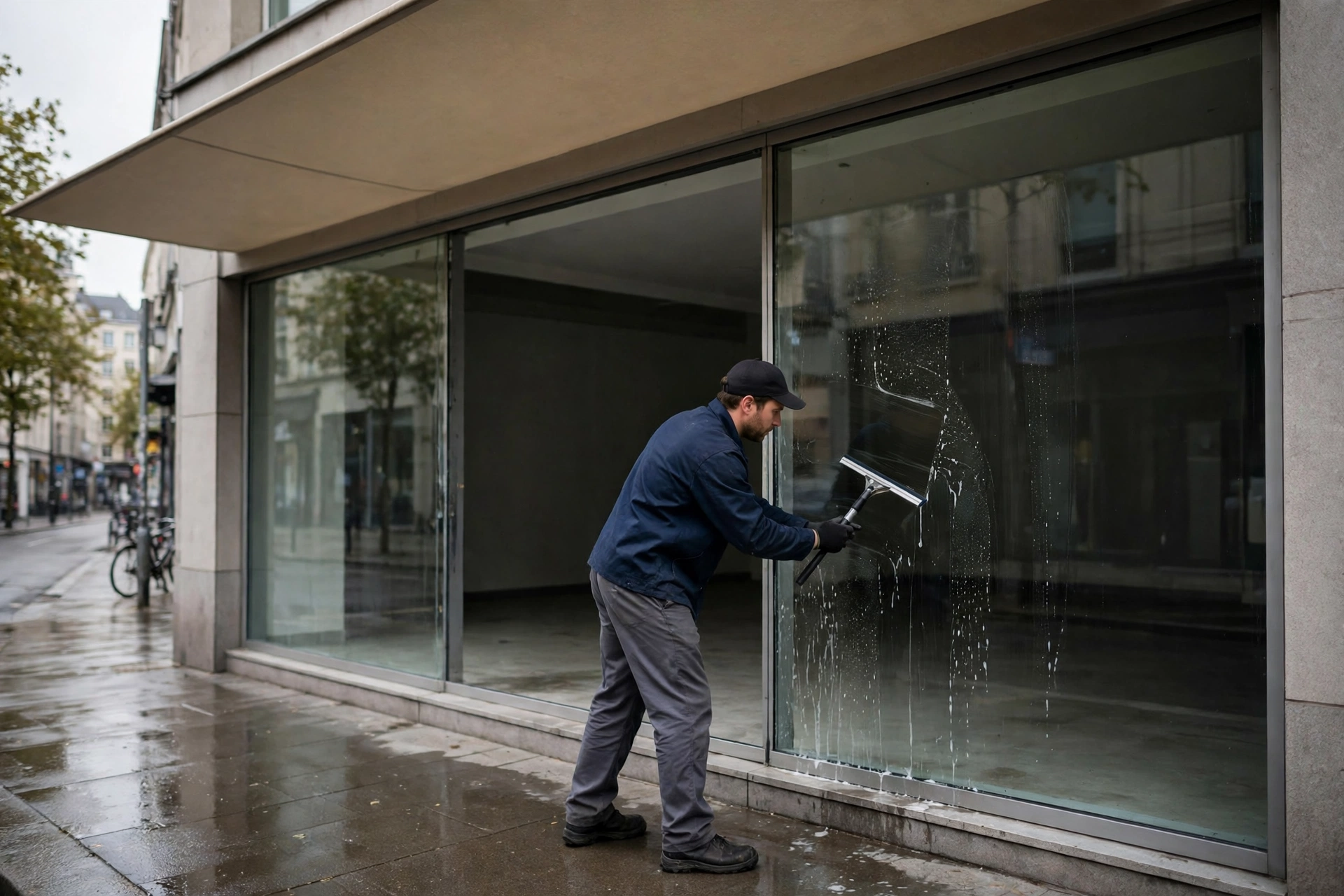
Window cleaning and siding washing often occur together, but the methods should be selected for each surface. Windows require techniques that remove dirt without unnecessarily stressing glass, frames, or seals.
What Affects Pressure Wash Vinyl Siding Cost?
Homeowners often ask about pressure wash vinyl siding cost when planning exterior maintenance. The final price can vary considerably because every property has different cleaning requirements.
Several factors influence the cost of a professional siding-cleaning service.
Size and Layout of the Property
Larger homes generally require more labor, cleaning solution, water, and equipment time. Multi-story properties may also require additional access arrangements.
Type and Condition of the Siding
Vinyl, stucco, painted wood, and composite materials require different cleaning approaches. Heavily stained siding or surfaces with substantial algae and mildew may need additional treatment.
Accessibility and Preparation
Dense landscaping, limited access, steep ground, and delicate outdoor features can increase the time required to complete a project safely.
Cleaning Method
Soft washing and pressure washing involve different equipment settings, products, and application procedures. The appropriate method depends on the surface and the type of contamination rather than price alone.
Additional Exterior Cleaning
Some homeowners combine siding washing with window cleaning, exterior trim cleaning, or other maintenance tasks. Bundling services may affect the overall estimate, depending on the provider.
Because prices vary by location and property condition, homeowners should request a detailed quote based on their specific needs. An accurate estimate should explain the areas included, the cleaning method, and any additional charges.
How Often Should You Schedule an Exterior House Washing Service?
The ideal cleaning schedule depends on your local climate, the amount of shade around your home, nearby vegetation, and the material used for your siding.
Properties exposed to dust, pollen, humidity, or heavy tree cover may require more frequent cleaning than homes in relatively dry, open environments.
As a general guideline, many homeowners consider exterior siding cleaning every one to two years. However, this is not a universal rule. Some properties need cleaning sooner, while others can go longer between services.
Watch for signs that your siding needs attention, including:
Green or black streaks on exterior walls.
Visible mold or mildew growth.
Accumulated dust and cobwebs.
Discoloration around shaded areas.
Dirt buildup near gutters, windows, and exterior trim.
Regular visual inspections can help you determine when cleaning is appropriate. Avoid unnecessary washing, especially if the siding is fragile or the weather conditions are unsuitable.
Common Mistakes to Avoid When Pressure Washing House Siding
Even powerful cleaning equipment cannot compensate for an unsuitable technique. Several common mistakes can lead to costly repairs.
Using excessive pressure: Strong water streams can damage siding, strip paint, and force moisture behind exterior materials.
Ignoring surface damage: Cleaning over cracked stucco, loose panels, or deteriorated caulking can worsen existing problems.
Using the wrong cleaning solution: Products that are unsuitable for a particular material may cause discoloration or surface damage.
Spraying upward beneath siding: Water entering behind panels can create moisture problems that are difficult to identify immediately.
Neglecting plants and outdoor fixtures: Cleaning solutions and runoff can affect landscaping and surrounding surfaces if precautions are not taken.
Treating every surface the same way: Windows, siding, masonry, and painted trim each have different cleaning requirements.
A thoughtful cleaning plan helps avoid these problems and supports better long-term exterior maintenance.
Why Choose Sparkle Windows for Exterior Cleaning?
Maintaining your home’s exterior involves more than removing visible dirt. It requires an understanding of different materials, suitable cleaning methods, and the precautions needed to protect surrounding features.
Sparkle Windows helps property owners focus on exterior cleanliness and the appearance of their homes. Whether you are dealing with dusty siding, stubborn organic stains, or windows that need attention, choosing the appropriate cleaning approach is an important part of the process.
Before arranging an exterior cleaning service, consider the condition of your siding, the type of buildup present, and any vulnerable areas around windows, doors, and trim. Discussing these details with a cleaning professional can help you determine the most suitable approach for your property.
A well-planned cleaning service can improve curb appeal, remove accumulated contaminants, and help maintain a cleaner-looking exterior without relying on unnecessarily aggressive techniques.
Final Thoughts
Choosing between soft washing and high-pressure washing depends on the type and condition of your home’s siding. Soft washing is often the preferred option for vinyl, stucco, painted wood, and other surfaces that require a gentler approach. High-pressure washing can be useful for appropriate durable materials when the technique is carefully controlled.
By understanding PSI settings, cleaning solutions, window-seal protection, and the factors that influence service costs, homeowners can make better decisions about exterior maintenance.
Sparkle Windows encourages property owners to prioritize surface compatibility and safe cleaning practices when planning an exterior house washing service. With the right method and regular maintenance, you can keep your home’s exterior looking clean while helping protect the materials that surround it.
Ready to improve your home’s exterior appearance? Contact Sparkle Windows to discuss your exterior cleaning needs and determine which cleaning approach may be suitable for your property.